About Euphorbia palustris L.
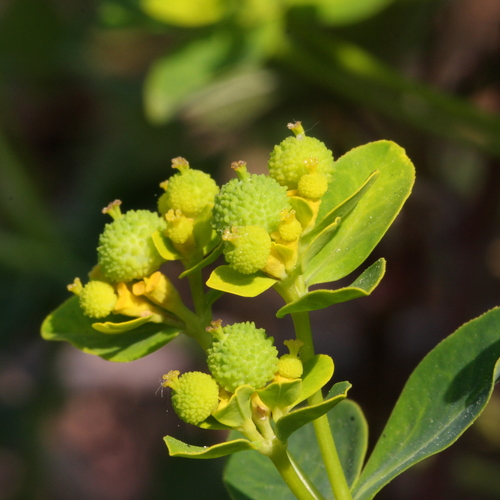
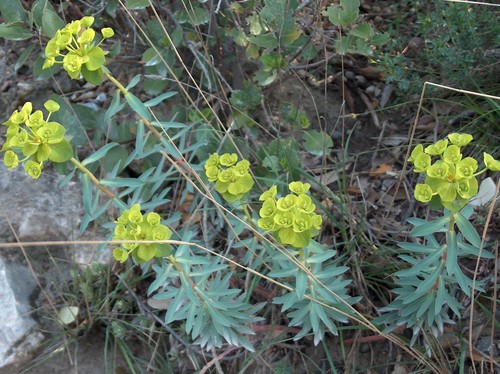
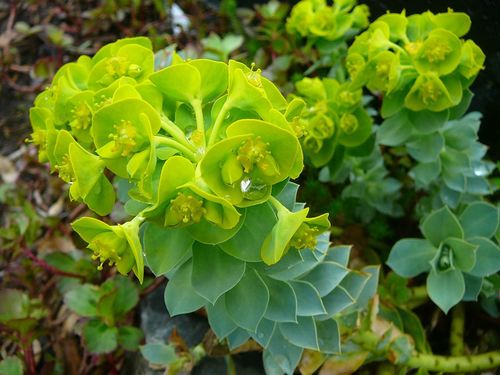
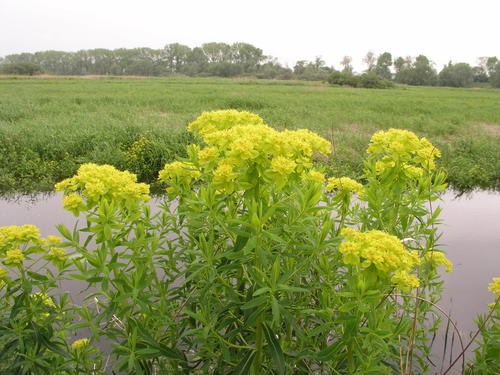
Euphorbia palustris, commonly called marsh spurge or marsh euphorbia, is a flowering plant species in the family Euphorbiaceae. It is native to marshland across most of mainland Europe and western Asia. This herbaceous perennial grows 90 cm (35 in) tall and wide. It has narrow leaves that turn red and yellow in autumn, and produces persistent, bright acid yellow flower-heads called cyathia that reach 15 cm (6 in) across in spring. Carl Linnaeus first published and described this species in his 1753 book Species Plantarum, on page 462. This plant prefers permanently moist conditions in full sun, which matches both its common name marsh spurge and its Latin specific epithet palustris, which means of marshland. It is considered an ideal gardening plant because it displays different colours through almost all seasons. Euphorbia palustris has earned the Royal Horticultural Society's Award of Garden Merit. As with all euphorbias, every part of this plant is toxic if ingested, and cut stems produce an irritant sticky sap.