About Euphorbia missurica Raf.
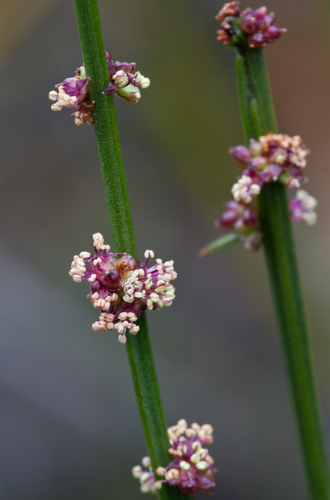
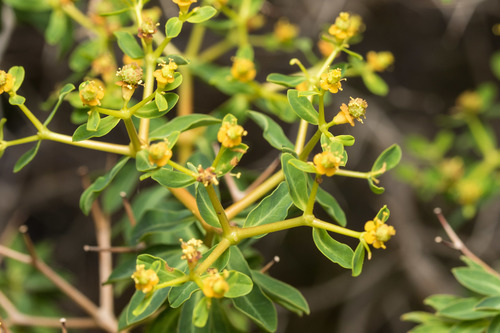
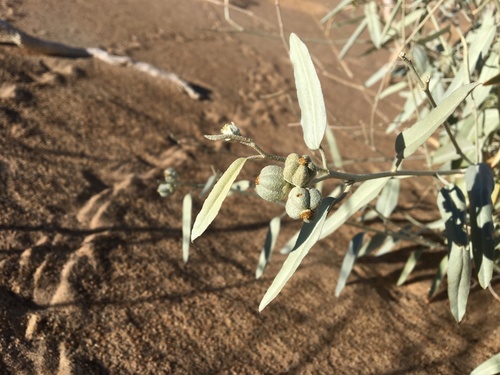
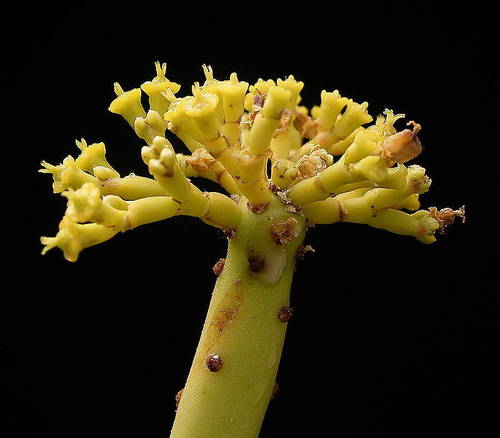
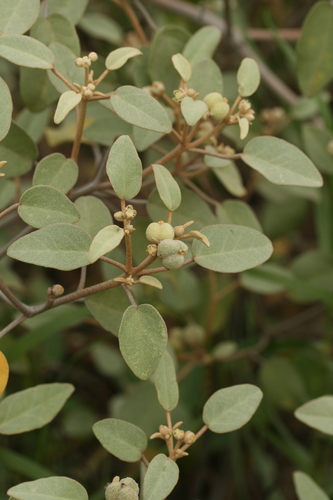
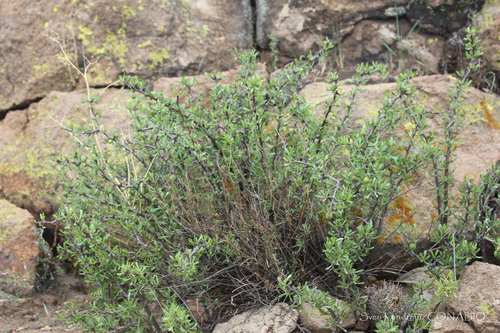
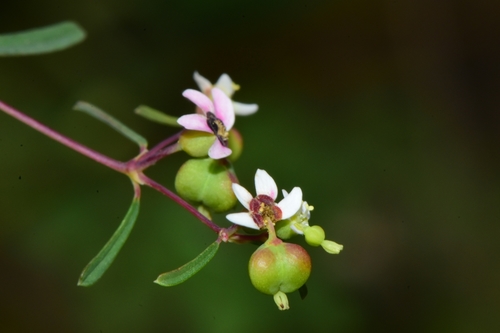
Euphorbia missurica Raf. is an annual species that grows from a taproot. Its branching stems are most often decumbent, meaning they lie along the ground. The small flowers of this species are arranged in structures called cyathia, which are grouped into terminal cymes. These cyathia have petal-like appendages. Each individual cyathium holds 29 to 48 male flowers plus one single female flower. Both the ovaries and the seed capsules are hairless. This species flowers during late spring and early summer. It grows in dry, sunny, sparsely vegetated habitats, specifically in rocky or sandy soils within dry prairies, waste areas, and along roadsides. Its known distribution covers the following U.S. states: Arkansas, Colorado, Iowa, Kansas, Minnesota, Missouri, Montana, North Dakota, Nebraska, New Mexico, Oklahoma, South Dakota, Texas, and Wyoming. In Minnesota, it is classified as a special concern species; historically, populations have been recorded on sandy shorelines in Ottertail County.