About Euphorbia ingens E.Mey. ex Boiss.
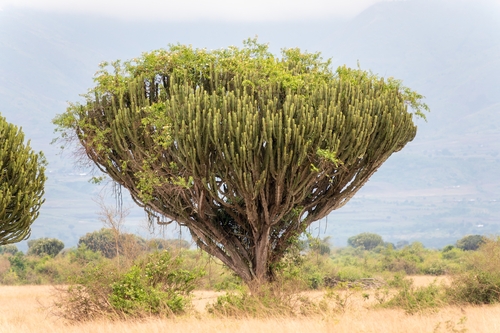
Euphorbia ingens E.Mey. ex Boiss. is a flowering plant species belonging to the Euphorbiaceae family, native to dry regions of southern Africa. It is commonly called the candelabra tree or naboom. This species produces an extremely poisonous milky latex that acts as a dangerous irritant. Euphorbia ingens grows across Malawi, Mozambique, Zimbabwe, Zambia, Botswana, Tanzania, northern and eastern South Africa, Rwanda, Uganda, Kenya, and Eswatini. It inhabits dry lands and semi-savannas, favors warm regions, and can survive long periods of drought. It most often roots on rocky outcrops, or deep in sand within bushy areas. Flowers of Euphorbia ingens attract butterflies, bees, and other insects, which pollinate the flowers while collecting pollen and nectar. Birds can eat the plant's seeds, and many birds build their nests in the tree's branches. Woodpeckers specifically frequently use withered segments of the plant for nesting. The extremely toxic milky latex of Euphorbia ingens can cause blindness, severe skin irritation, and poisoning if ingested by humans or animals. Despite its toxicity, this plant has been used for medicinal purposes: it has been employed as a purgative, to treat ulcers, and Venda and Sotho people use it to treat cancer. In South Africa and Zimbabwe, stems of the candelabra tree are also used to poison fish. The wood of the plant is light and solid, so it is used to make doors, planks, and boats. The candelabra tree is highly adaptable, and is cultivated in gardens and rockeries. It prefers full sun and requires very little water, and has very few pests thanks to its toxic latex.