About Euphorbia hylonoma Hand.-Mazz.
Euphorbia hylonoma Hand.-Mazz. is a flowering plant species in the Euphorbiaceae family. It is native to China and the Russian Far East, specifically Primorsky krai. This herbaceous species grows on roadsides, in valleys, on mountain slopes, and in grasslands, steppes, scrub, and sparse forests, at elevations between 2,000 and 3,000 metres, or 6,600 to 9,800 feet.
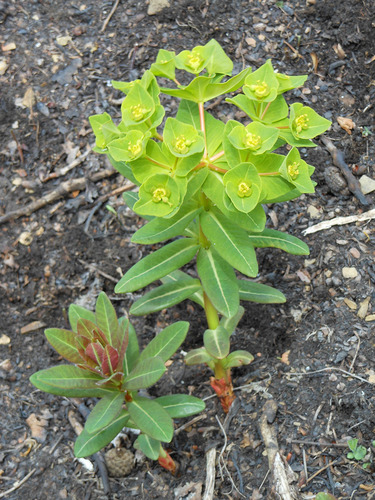
Individuals of this species are erect herbaceous plants that reach a height of 50–90 cm, or 20–35 inches. They have thick roots over 10 cm (3.9 in) long, with a diameter of 3–5 mm (0.12–0.20 in). Stems are 3–7 mm (0.12–0.28 in) thick and branch at the top. Leaves are alternate and shaped oblong to elliptic, measuring 4–10 cm (1.6–3.9 in) by 1–2 cm (0.39–0.79 in).
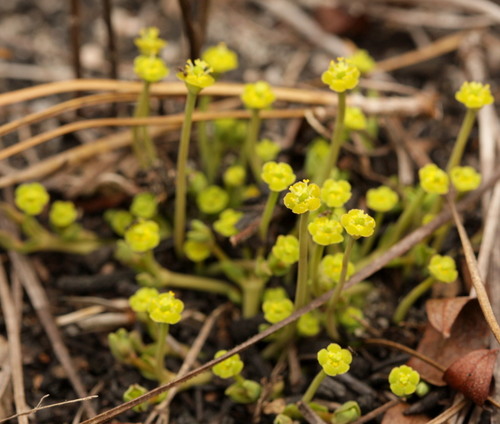
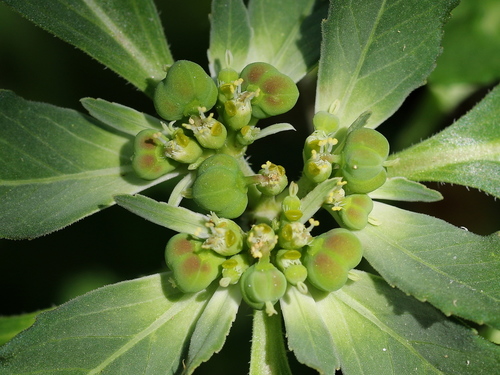
The flowers of Euphorbia hylonoma are grouped in cyathia. Male flowers extend past the cyathium involucre, while female flowers have distinct pedicels. The fruit capsule is globose and smooth. Seeds are ovoid-globose, gray or light brown, and have a slightly striated surface. This species flowers from April to June.
In Chinese folk medicine, the root of this plant is used to treat constipation, bloating, and cirrhosis of the liver. Roots are harvested in autumn, then dried in the sun. The milky latex produced by the plant is toxic, and can cause skin irritation if it touches the skin.