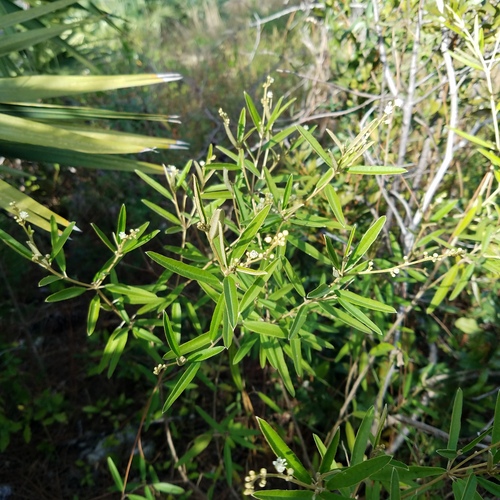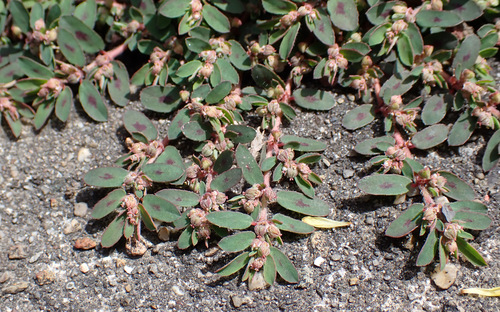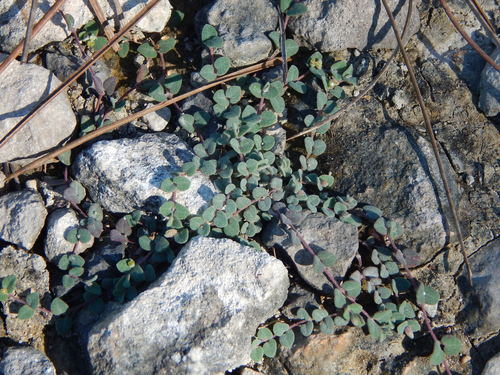
About Euphorbia deltoidea Engelm. ex Chapm.
Euphorbia deltoidea Engelm. ex Chapm., also known by the synonym Chamaesyce deltoidea and common name wedge sandmat, is a flowering plant species endemic to Florida, United States. This species has complex, unsettled taxonomy: some authorities recognize four subspecies within it, while others divide it into just three. It is also still frequently classified under the older genus Chamaesyce instead of the current genus Euphorbia. One of its subspecies, E. deltoidea ssp. deltoidea, is a federally listed endangered species commonly called deltoid spurge, which grows only in Miami-Dade County. A second subspecies, E. deltoidea ssp. adhaerens, is often lumped together with ssp. deltoidea under the name deltoidea rather than recognized as a separate taxon, making it difficult to count the number of distinct endangered populations. This issue is generally handled by assigning the endangered species label to any taxon within the overall species that is restricted to Miami-Dade County, regardless of how many separate names are used. Deltoid spurge occurs in Miami-Dade County, a heavily developed urban area where approximately 98% of the plant's natural habitat has been severely altered or destroyed, which accounts for the taxon's rarity. The species grows in pine rocklands, an increasingly rare forest habitat native to South Florida that is maintained by periodic wildfire. It inhabits open, sunny sites and relies on wildfire to remove overgrown brush and accumulated leaf litter that would otherwise shade the plants out. Fire suppression in Miami-Dade County has eliminated this natural wildfire regime. Additional threats to the species include invasion by non-native plant species such as Burma reed, Neyraudia reynaudiana.