About Euphorbia characias L.
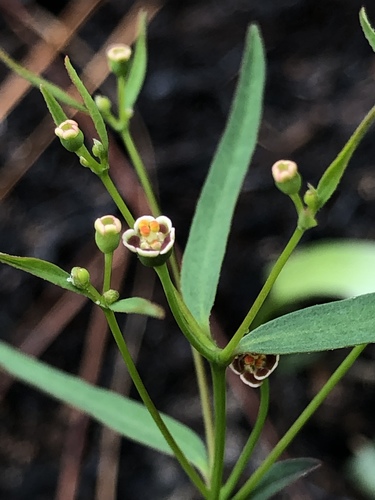
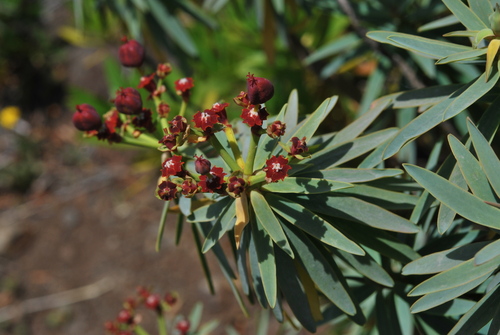
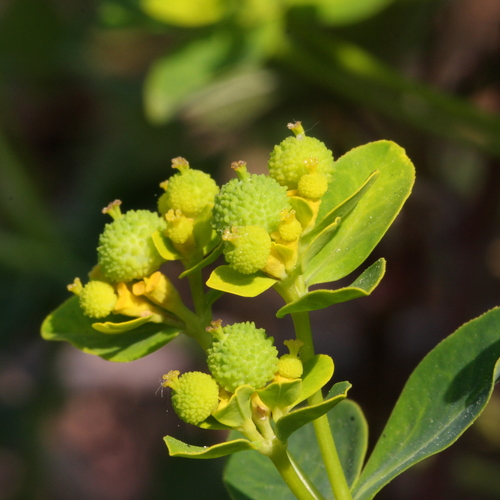
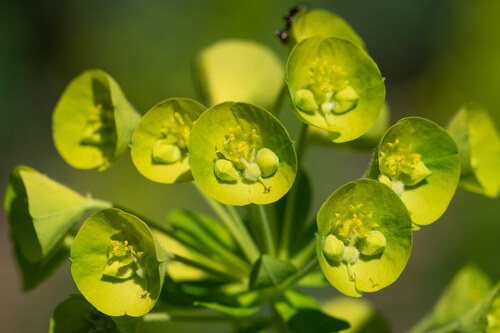
Euphorbia characias L. produces numerous medium to tall unbranched stems covered in long, narrow leaves that are densely coated in short hairs (a trait called tomentose). Within its yellow, cup-shaped cyathia (specialized flower clusters), the floral nectar glands are dark for subspecies characias, and yellow for subspecies wulfenii. These cyathia are arranged in large, dense clusters that range from spherical to oblong in shape, and they develop from spring through early summer. Its fruits are smooth capsules covered in dense hairs. This is a hardy species that can tolerate long periods of drought, grows best in dry areas that are often far from the water table, and adapts to both flat and mountainous terrain. It can also withstand high salinity levels. Two similar species are Euphorbia kotschyana, which has shiny upper leaf surfaces, and Euphorbia thompsonii, which has hairy leaves but unusually very short upper leaves. In cultivation, Euphorbia characias is valued as an ornamental plant for its drought tolerance and groundcovering ability. It grows well in any location, whether sheltered or exposed, as long as it is planted in light soil and full sun. It is fully hardy down to temperatures of −10 °C (14 °F). Euphorbia characias also has uses in traditional medicine. Like many other species in the genus Euphorbia, it produces a toxic, white, sticky sap that has been used since ancient times to treat skin growths including cancers, tumors, and warts.