About Euphorbia caput-medusae L.
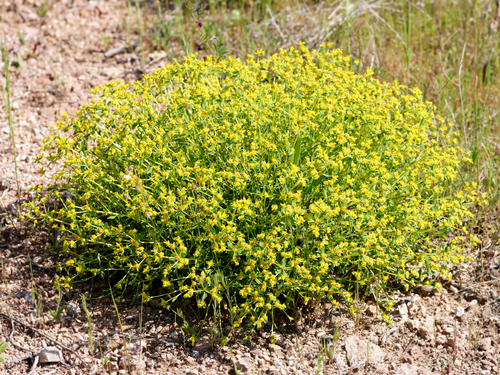
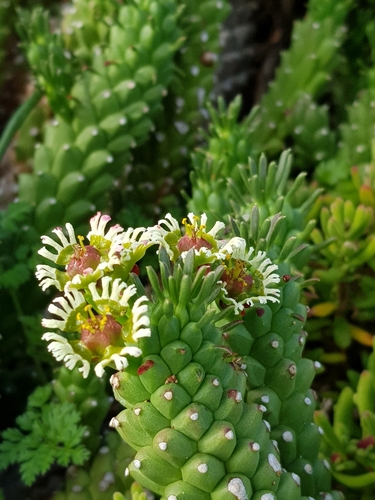
This succulent is named for its resemblance to the head of Medusa, with many serpent-like stems growing from a short central caudex. The caudex is sometimes more than 1 metre in diameter, is partly buried in the ground, and is covered with numerous crowded branches. Euphorbia caput-medusae was introduced to the Netherlands around 1700, and it was one of the early species described by Linnaeus in Species Plantarum (1753). This species is primarily coastal, growing along the western coast of South Africa, extending south to the Cape Peninsula. It remains common around Cape Town, where it grows in deep sand or rocky coastal outcrops. It is especially common in the Peninsula Shale Renosterveld vegetation of Signal Hill. It also grows along the south coast of the Western Cape Province. The form previously known as muirii ranges east along the coast from Cape Town as far as Mossel Bay.