About Euphorbia candelabrum Welw.
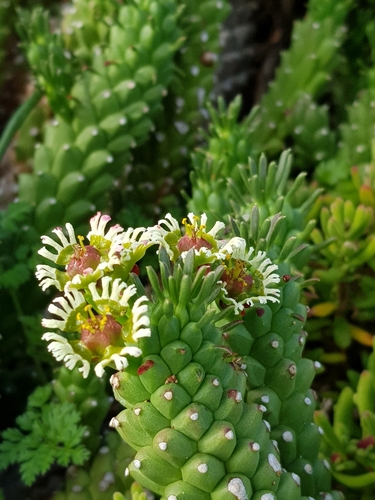
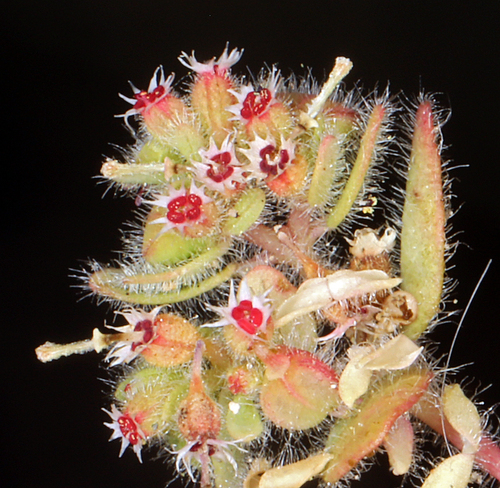
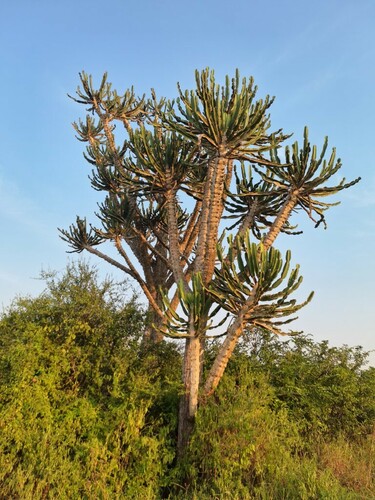
Euphorbia candelabrum is a succulent plant species in the family Euphorbiaceae, and is one of several plants commonly called candelabra tree. It is endemic to the Horn of Africa and eastern Africa along the East African Rift system. In Ethiopia, it is known by the Amharic name qwolqwal, or the Oromo name adaamii. It is closely related to three other Euphorbia species: Euphorbia ingens from dry regions of southern Africa, Euphorbia conspicua from western Angola, and Euphorbia abyssinica, which is native to Sudan, Eritrea, Djibouti, Ethiopia and Somalia. Its scientific name comes from its growth habit, which is often considered to resemble the branching of a candelabrum. This candelabra tree grows in dry deciduous and evergreen open wooded grasslands, on rocky slopes, and very rarely on termite mounds. Its habitat range shrinks as rainfall decreases. These trees typically reach 12 metres in height, though some recorded specimens have grown up to 20 metres tall. Many fire-sensitive species like Grewia and other Euphorbiaceae plants are typically restricted to termite mounds rather than dominating open savanna. However, E. candelabrum is widespread across the savanna and short-grass areas of Uganda's Queen Elizabeth National Park. This is an unusual habitat for tall succulents, since tall succulents are typically poor invaders of frequently burned land. E. candelabrum's success in this habitat appears to stem from heavy grazing by African mammals including the Ugandan kob (Kobus kob) and waterbuck (Kobus ellipsiprymnus defassa), which has led to an overall reduction in intense wildfires. Some authorities split this species into two varieties: E. candelabrum var. candelabrum and E. candelabrum var. bilocularis. E. candelabrum has been used in traditional Ethiopian medicine. Its sap mixed with clarified honey was used as a purgative to treat syphilis, and when mixed with other medicinal plants, it was made into a salve to ease the symptoms of leprosy. This plant currently has negligible commercial value. Author Richard Pankhurst records two separate attempts to collect its gum near Keren, Eritrea, before 1935, and neither attempt was commercially successful. It has been used for firewood, timber, and fencing. Its wood is light and durable, and has been used for a range of items including roofing, tables, doors, matches, boxes, mortars, musical instruments, and saddles. Euphorbia candelabrum is known to be quite toxic, but it has still been used for medicinal purposes. Its latex contains highly irritant ingenol diterpene esters, which have both harmful and beneficial properties. In addition to causing blistering and skin irritation, ingenol products show tumour-promoting activity: they make cells resist apoptosis and continue multiplying. A 1961 study found that latex from multiple Euphorbia species, including E. candelabrum, is a potent tumor-promoting agent. However, ingenol has been reported to support anti-HIV and anti-leukemia cellular activity that protects T-cells. Beyond its traditional use as a purgative for syphilis and a salve for leprosy, E. candelabrum sap has also been used in folk medicine to treat coughs, tuberculosis, malaria, and HIV infections. It can be mixed with fat and applied topically to help heal wounds, sores, and warts.