About Euphorbia antisyphilitica Zucc.
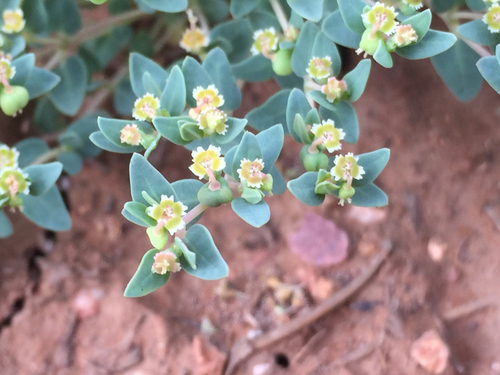
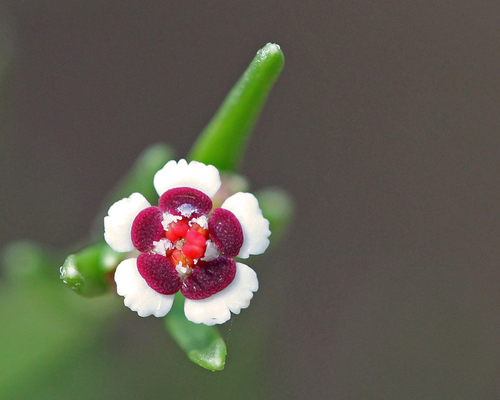
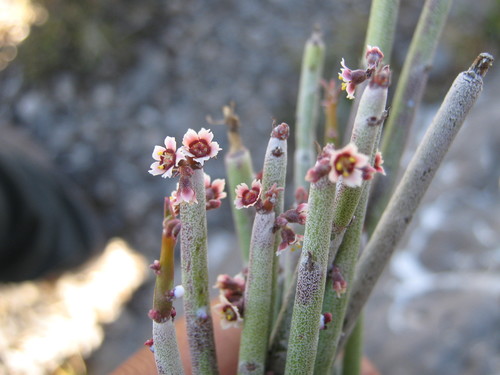
Euphorbia antisyphilitica Zucc. is a species of flowering plant in the spurge family, Euphorbiaceae. It is native to the Trans-Pecos region of Texas and southern New Mexico in the United States, and to Chihuahua, Coahuila, Hidalgo, and Querétaro in Mexico. Its common names are candelilla and wax plant; the name wax plant is more often used for members of the unrelated genus Hoya. This species is a shrubby plant with densely clustered, erect, essentially leafless stems. The stems are covered in wax to reduce transpiration. Historically, the white sap of E. antisyphilitica was used in Mexico to treat sexually-transmitted diseases. Commercial harvesting of candelilla wax began at the start of the twentieth century, and demand grew greatly during World War I and World War II. The candelilla wax industry largely disappeared after World War II, due to reduced candelilla populations and the emergence of cheaper petroleum-based waxes. Later, new uses for candelilla wax were developed, mainly in the cosmetic and food industries, and the wax is still produced in northern Mexico and exported to other countries. Candelilla is growing in popularity as a landscape plant in parts of the arid southwestern United States. It is popular for landscape use for several reasons: once established, it needs little water beyond natural rainfall in cities like Phoenix and Tucson, so it works well as a median planting. It can survive in areas with reflected light. It grows best in well-drained soils, but can tolerate some clay or limestone. Butterflies visit the plant, although it is not commonly classified as a "butterfly plant". It tolerates cold temperatures down to 15 degrees Fahrenheit, is not generally bothered by pests, and can be grown in containers.