About Euparthenos nubilis Hübner, 1823
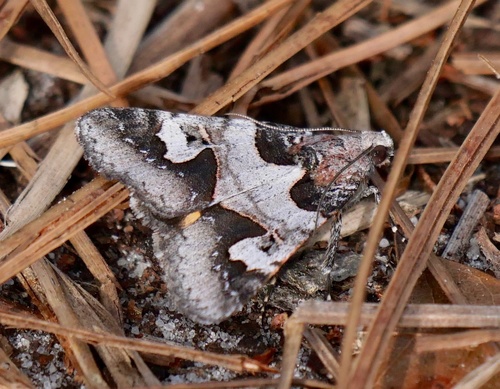
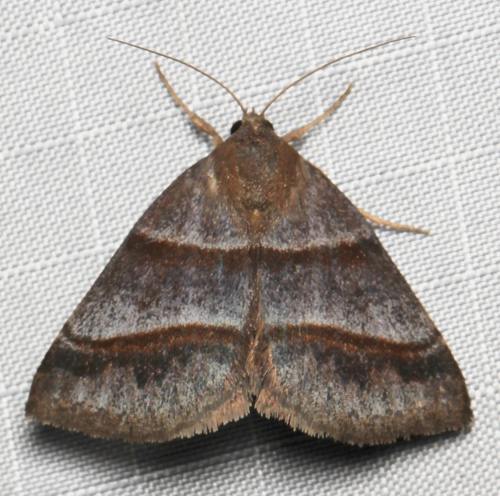
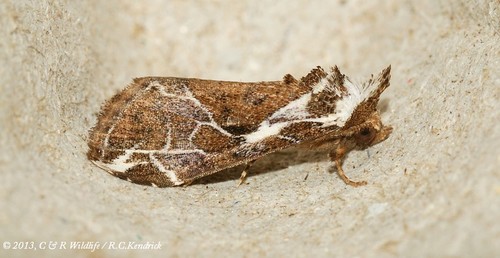
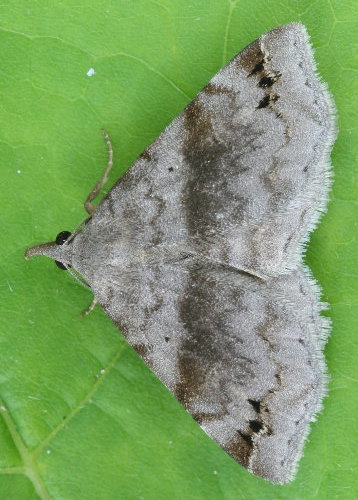
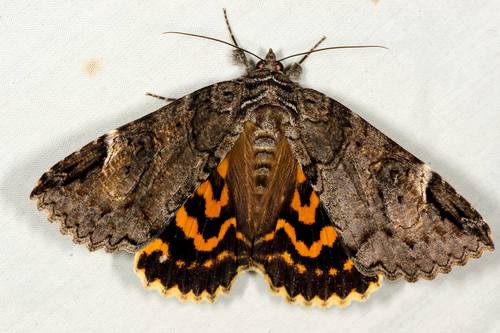
Euparthenos is a monotypic moth genus in the family Erebidae, erected by Augustus Radcliffe Grote in 1876. Its only species is Euparthenos nubilis, commonly called the locust underwing, which was first described by Jacob Hübner in 1823. Adult locust underwings resemble underwing moths of the fairly closely related genus Catocala in color, pattern, and the habit of resting on tree trunks. However, E. nubilis can usually be identified immediately by the four concentric black bands present on each hindwing; Catocala species have only one or two black bands per hindwing, with a maximum of three. Pattern-altering color morphs of E. nubilis are known, and these can be hard to correctly identify without detailed examination. This moth has light grey forewings marked with a pattern of darker grey and brown lines and shading. Its hindwings are yellow orange, with the four black bands per hindwing noted above. The wingspan of E. nubilis ranges from 56 to 70 mm, which measures just over 2 inches to almost 3 inches. The species is distributed across North America, ranging from Maine, Ontario and Quebec south to northern Florida, and west to Nebraska and Arizona. Adults are active on the wing from April to September, and there are two generations per year. The larvae feed on Robinia, commonly called locust tree, species, including the black locust R. pseudoacacia. Adult locust underwings feed on the juice of fermenting fruit, and are attracted to lights.