About Eumorpha labruscae Linnaeus, 1758
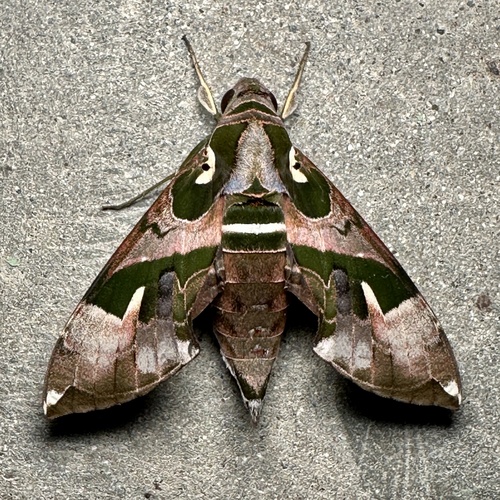
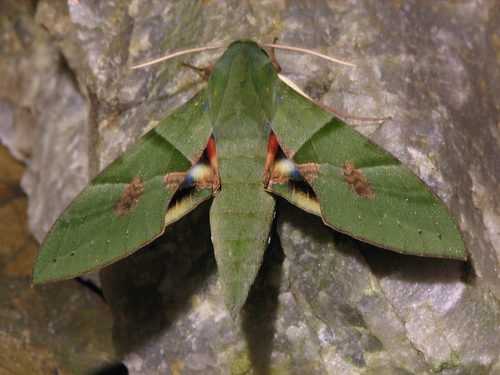
Eumorpha labruscae, first described by Carl Linnaeus in the 10th edition of Systema Naturae in 1758, has a wingspan ranging from 4+5⁄16 to 4+3⁄4 inches (11 to 12 cm). The moth’s body and dorsal forewings are deep green. Its dorsal hindwings feature purple-blue patches, yellow borders, and a red spot near the inner margin. The underside of the moth is yellow green and gray purple. Like most species in the Sphingidae moth family, this species’ caterpillars pupate inside burrows. For its life cycle: adult females lay eggs on the leaves of host plants, primarily grapes from the genus Vitis and vines from the genus Cissus. After hatching, caterpillars begin feeding on the host plant; these caterpillars resemble a snake’s head. When ready to pupate, caterpillars climb down from their host plant and burrow underground. Right before eclosion, the developed pupa wiggles its way up to the soil surface. Newly emerged adults climb onto a plant or other solid surface, then pump fluid into their wings to fully extend them. Females release pheromones at night, and males fly into the wind to detect and follow the pheromone odor plume. Adults are thought to feed on flower nectar.