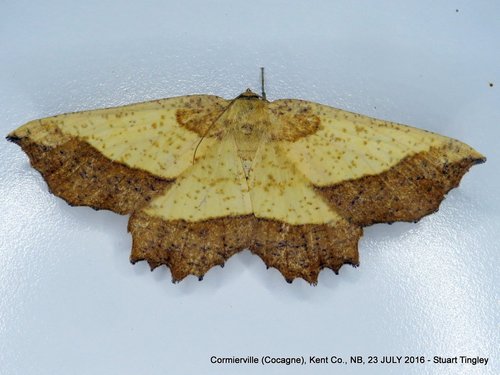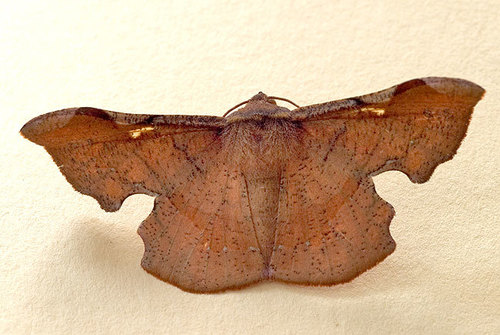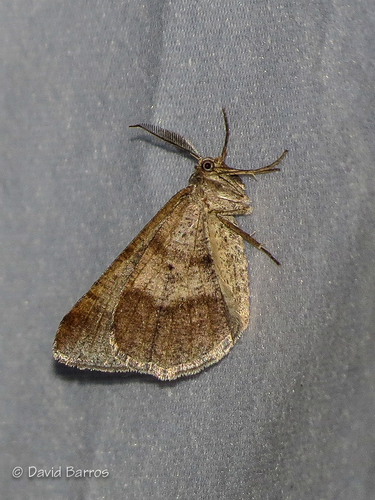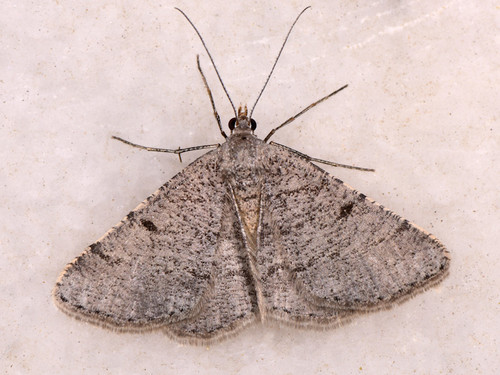
About Eumacaria madopata (Guenée, 1858)
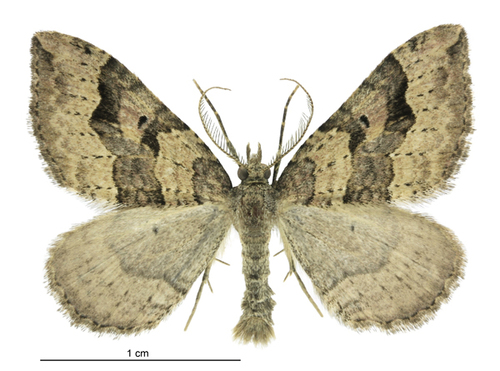
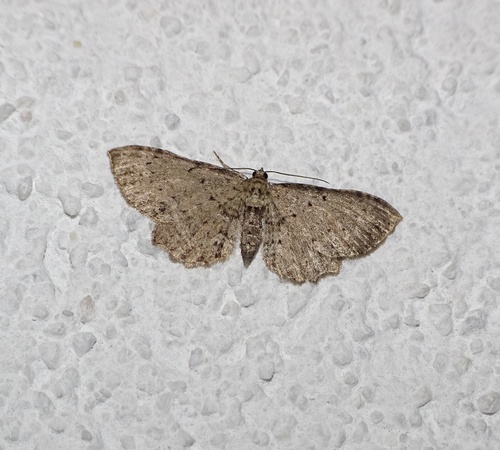
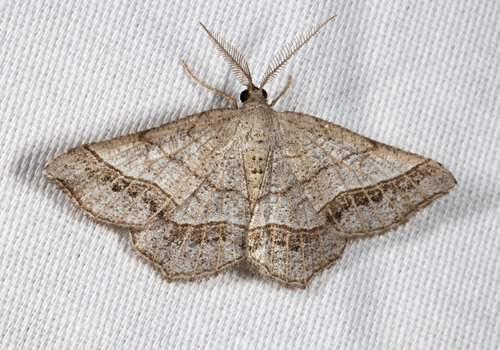
Eumacaria is a monotypic moth genus in the family Geometridae that was described by Packard in 1873. This genus contains only one species, Eumacaria madopata, commonly known as the brown-bordered geometer moth. This species was first described by Achille Guenée in 1858. It is native to North America, with confirmed records from British Columbia, northern Washington, southern Saskatchewan, regions ranging from Maine to Florida, South Dakota, North Dakota, Nebraska, Wyoming, Idaho, Colorado, and New Mexico. Its typical habitats are orchards and shrublands. In the state of Connecticut, this species is classified as threatened. The wingspan of adult brown-bordered geometer moths ranges from 20 to 25 mm. Adults are active from early June to early July in the northern parts of its range, and from April to September in the southern parts. This species produces one generation per year. The larvae feed on Prunus species, including Prunus pensylvanica and Prunus serotina, and also feed on plants in the Pyrus genus.