About Eulithis testata (Linnaeus, 1761)
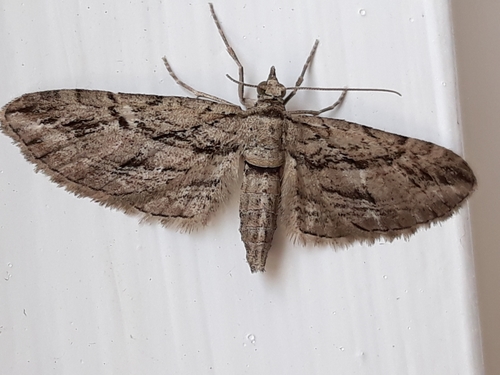
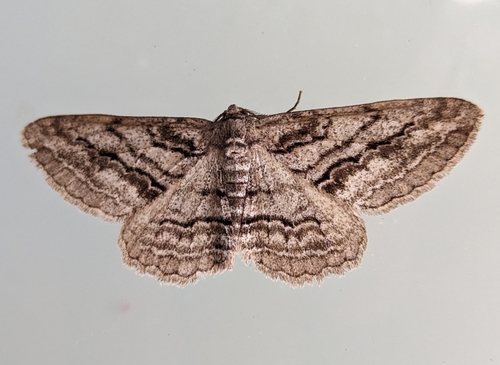
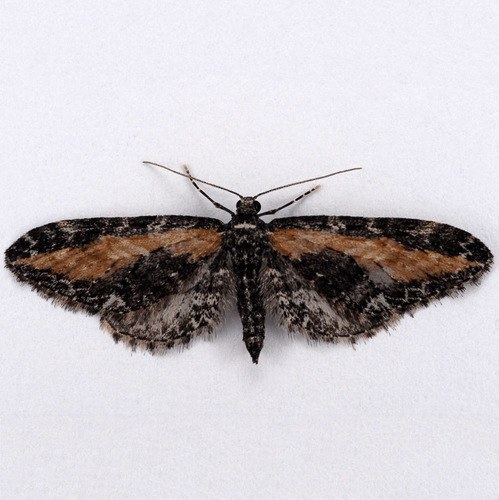
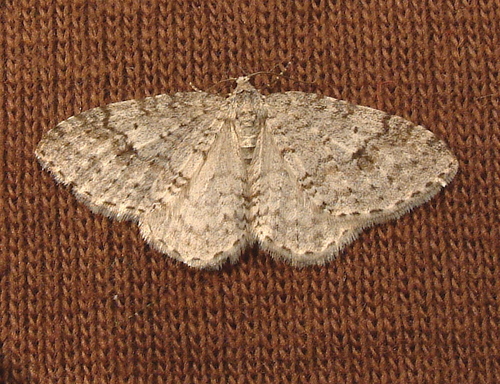
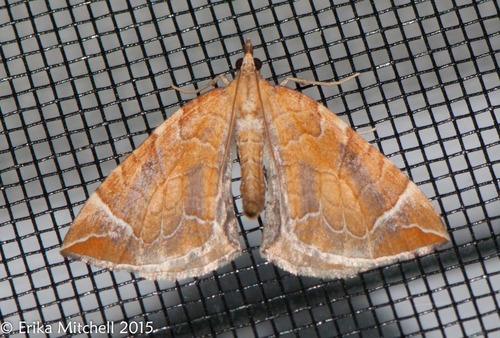
Eulithis testata (Linnaeus, 1761) has a wingspan of 25–35 mm. The forewings display a variety of ground colors, ranging from pale yellow, through orange yellow, reddish yellow, and brown yellow, to purple brown. The central mid-wing field is always obscured, and is bordered by lines that have a significant bend and follow a nearly identical, parallel course. One or two additional crosslines within the midfield also run nearly parallel, but are much less developed. The cell within the midfield stands out; the midfield bulges outward, and a dark crossline is present here. The marginal field is often whitish-brightened, and a wavy subterminal line is absent. Below the forewing apex sits a large, prominent, crescent-shaped spot. The forewing fringes are plain brown. The hindwings have a shimmery white base color, with a grayish edge and an indistinct gray crossline. The larva is a rather pale yellowish brown, often with a slight green tint; it is weakly marked overall, and its most conspicuous feature is a dark dorsal line. Adult Eulithis testata are active on the wing from July to mid-September. This species produces two generations per year in the Netherlands, and only one generation per year in the United Kingdom and North America. The larvae feed on species of the genera Vaccinium, Salix, and Populus, feeding primarily on Populus tremula.