About Eugenia stipitata Mc Vaugh
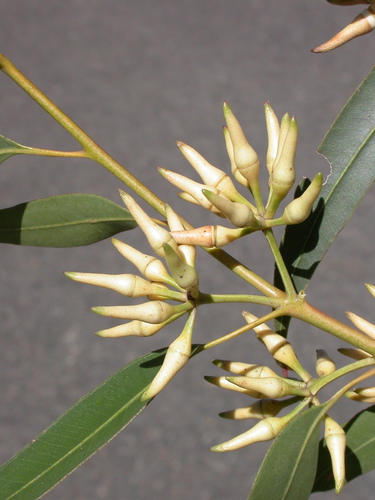
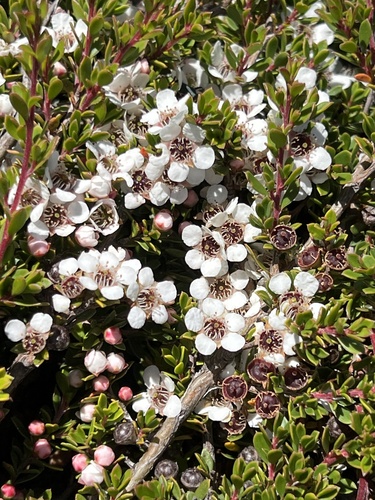
Eugenia stipitata Mc Vaugh, commonly known as arazá, is believed to have originated in the far western Amazon basin, likely in the Peruvian Amazon. It is a lesser-known, underutilized crop with favorable properties for further agricultural development. While the fruit is very acidic when eaten fresh straight from the tree, it can be processed into a range of palatable, refreshing foods including juices, nectars, marmalades, and ice creams. Most wild populations grow on old, non-floodable terraces in highly leached, tropical white podzolic soils. These wild populations are split into two subspecies: ssp. sororia occurs in the area between the Marañón and Ucayali Rivers, from the start of the Amazon River as far as Iquitos; ssp. stipitata occurs in the Brazilian state of Acre. The species is only native to western Amazon, and does not appear to have been widely spread by Indigenous peoples, though some of the best varieties were selected by Indigenous people of Peru around Iquitos. Locally cultivated varieties can reach 12 cm in diameter and weigh up to 740 g, while wild fruits do not exceed 7 cm in diameter or 30 g in weight. Less frequently, the species can also be found growing in Bolivia, Brazil, and Colombia outside of its native core range. It is grown as an exotic species in other tropical areas of South America, Central America, and Florida, and has been introduced to other tropical regions such as Malaysia. The genus Eugenia was named after Francois Eugene, Prince of Savoy (1663–1736), an Austrian general who won the Battle of Blenheim alongside Marlborough, and was a prominent patron of art, science, and literature. Arazá is a shrub or small tree that reaches 2.5–15 m in height, with a densely branched canopy. Its flaking bark ranges in color from brown to reddish. The leaves are simple, opposite, elliptical to slightly oval, measuring 8–19 cm long by 3.5–9.5 cm wide, with an acuminate apex, a rounded and often subcordate base, and entire margins. The upper leaf surface is dull dark green, with 6-10 pairs of impressed lateral veins; the lower leaf surface is pale green, covered in short soft hairs with scattered additional hairs. Inflorescences form as axillary racemes, usually holding 2 to 5 flowers. Each flower is 1 cm wide, borne on a pedicel, with 4 rounded sepals, 5 oval white petals, and linear bracteoles. The calyx has 4 rounded sections, the plant bears 70 long stamens, the ovary has 3–4 locules (each holding 5–8 ovules), and the style is 5–8 mm long. Fruits are globose, oblate, or spherical berries, measuring 2–10 cm by 2–12 cm and weighing up to 750 g. When ripe, they are pale green shifting to bright yellow, with thin, velvety skin surrounding a juicy, aromatic, acidic, thick pulp that usually contains 12 seeds. Arazá seeds are recalcitrant, meaning they do not survive drying and freezing during ex-situ conservation. Fresh arazá fruit can be eaten directly, but high acidity means it is best enjoyed with added sugar. Economic interest in this fruit has grown in Colombia since the end of the 20th century; the fruit is currently sold by growers' associations and even in supermarkets, and exports to the UK have only recently begun. The United States is in the process of registering arazá for sale as fresh produce. In addition to food use, the tree is used to rehabilitate exhausted land and grown as an ornamental. During its first year, and sometimes the second or third year, arazá can be intercropped with annual crops. It fits well into agroforestry systems, and grows better in the shade of taller trees than it does under lower shade conditions. Propagation of arazá is most commonly done by seed, as with most fruit trees. Seeds have the highest germination rate when extracted from fully mature fruits. If kept in water, seeds retain an 80% germination success rate for up to 60 days. Pruning of young trees is recommended to encourage formation of three to four strong main branches. Annual pruning and general clean-up pruning should also be carried out. Because seeds are recalcitrant, they lose more than 70% of their viability after 40 days in cold storage. Seed beds must therefore be planted within the first five days after seed harvest. Seed beds are kept in full shade; seeds are planted 2 cm apart and only lightly covered, as thicker covering inhibits germination. Partly decomposed softwood is recommended as a seed bed growing medium, while the use of plain earth is not advised. Germination is not uniform and may take up to 80 days, but germination rates can reach around 100% under the recommended conditions. Seedlings are kept in the seed bed until they reach 7 to 10 cm in height. They are then transplanted into 6 to 8 kg polyethylene bags filled with a mixture of soil and 10% manure. Plants stay in these bags for up to one year, spending six months in full shade followed by six months in partial shade. After one year, plants are planted out to their permanent growing sites. In San Roque, a spacing of 3 x 3 m is used, with planting holes 50 cm deep and 30 to 50 cm in diameter. The planting hole soil is mixed with 0.50 kg of manure. It is recommended that weeds are removed from the growing area every month, and organic material is added to the soil. Experimental fertilization trials indicate that organic manure fertilizer is preferable to chemical fertilizers. Chemical fertilizers had no effect on fruit set (which ranged between 20 and 40 percent, with an average of 25 percent) or total yield, so chemical fertilization is not recommended for the region.