About Eugenia dysenterica DC.
Eugenia dysenterica DC. is a tree native primarily to the Brazilian states of Goiás, Tocantins, Mato Grosso do Sul, Bahia, Minas Gerais, and São Paulo. It grows mostly in areas with an average annual temperature between 21 and 25 °C (70–77 °F), at altitudes ranging from 380 to 1,100 metres (1,250–3,610 ft).
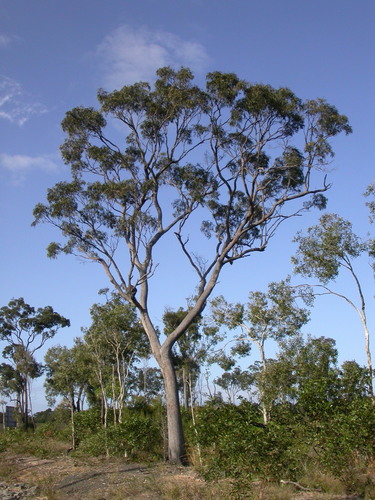
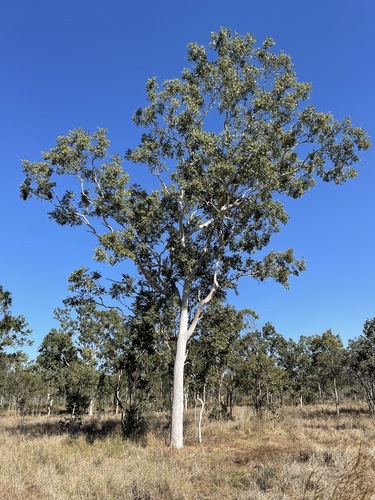
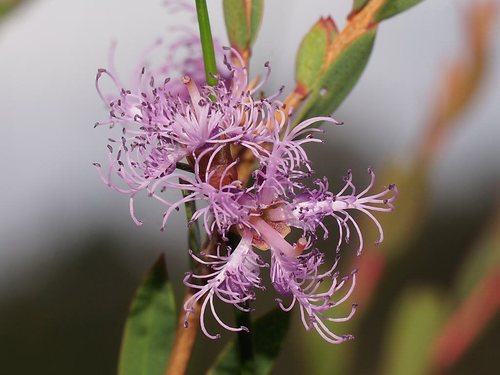
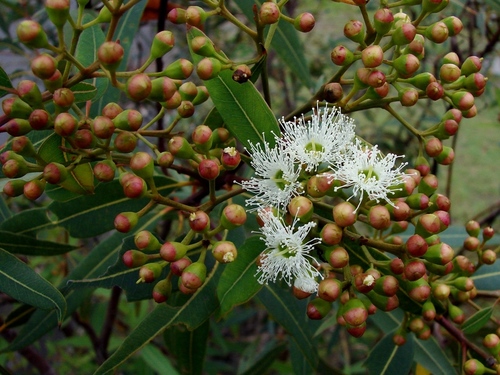
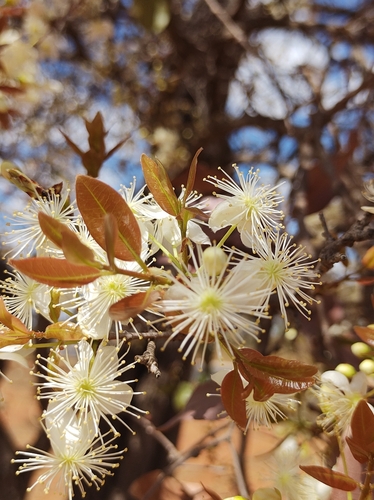
Mature individuals reach 4 to 10 m (13 to 33 ft) in height, with a rounded canopy. Their trunks grow 20 to 40 centimetres (8 to 16 in) in diameter, covered in thick, irregular corky bark that measures 1–2 cm (0.39–0.79 in) thick. The tree produces white flowers 15–20 mm (0.6–0.8 in) wide, which grow either singly or in groups of three. Flowers open between August and September, and the species undergoes both self-pollination and cross-pollination.
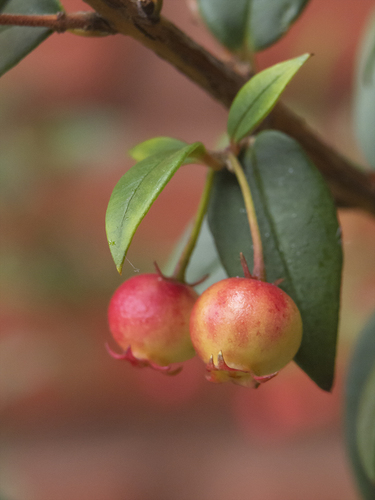
A single tree can produce up to 1500 fruits, which ripen over a roughly two-month period between September and December, with timing varying by climate. Fully ripe fruits fall from the tree, typically at the start of the rainy season. The fruit is a yellow-orange, roughly spherical berry, with a dry calyx remnant positioned opposite the stem. It is about 2–3 cm (0.8–1.2 in, or approximately one inch) in diameter and usually weighs 6–14 grams (0.21–0.49 oz). It has a thin waxy skin, and sweet-sour, slightly astringent pulp 1–2 mm thick that loosely surrounds one to three round, light gray seeds.
The ripe fruit is edible raw, but consuming large quantities produces a laxative effect; this characteristic gives the species its specific epithet dysenterica, as well as its local common name in Portuguese. Ripe fruits keep for three days at room temperature, or 10 days when refrigerated. Locally, the fruit is used to make sweets, jams, beverages, and sherbets, both for home use and by small-scale industries. It contains substantial amounts of polyunsaturated fatty acids, mainly linoleic acid and linolenic acid, plus 18 mg of vitamin C per 100g of fruit. Unripe berries are used as cattle feed.
The wood of Eugenia dysenterica DC. is dense (0.82 g/cm³), hard, and finely grained, but of inferior quality. It is used for fence posts, firewood, and charcoal, and occasionally for rustic furniture and other light construction. The bark is used for tanning leather and making cork products, and it is also used in folk medicine to treat dysentery. Leaves are used as cattle feed, and in folk medicine as a heart tonic, and as a treatment for dysentery, diabetes, and jaundice. Oil extracted from the leaves has been claimed to have antifungal properties against Cryptococcus neoformans. Thanks to its abundant bright berries and dark green foliage, the tree is sometimes used as a decorative plant.
This species can be easily reproduced from seeds, which contain around 50% water and cannot tolerate drying. When planted 2 cm (0.79 in) deep, seeds germinate in 40 to 60 days. It can also be reproduced in vitro from buds. The plant is adapted to the poor soils of the Cerrado, but grows better with fertilizers containing calcium and phosphorus, as well as organic fertilizers. Agricultural pests affecting the species include brown spot disease, caused by the fungus Phleosporella sp., leaf-cutting ants, and fruit flies such as Anastrepha obliqua.