About Eucosma cana (Haworth, 1811)
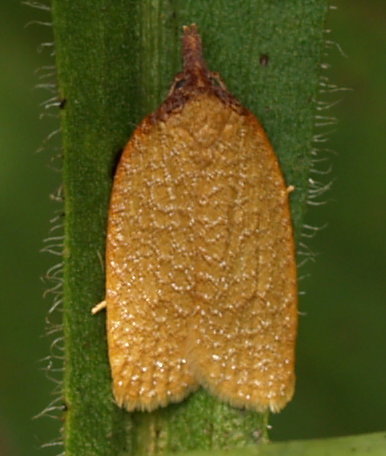
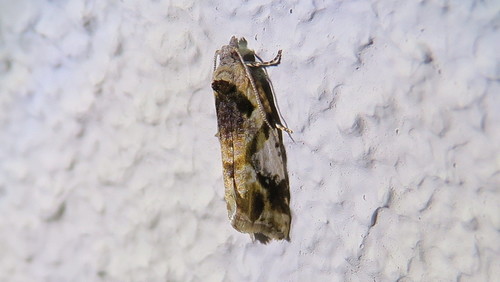
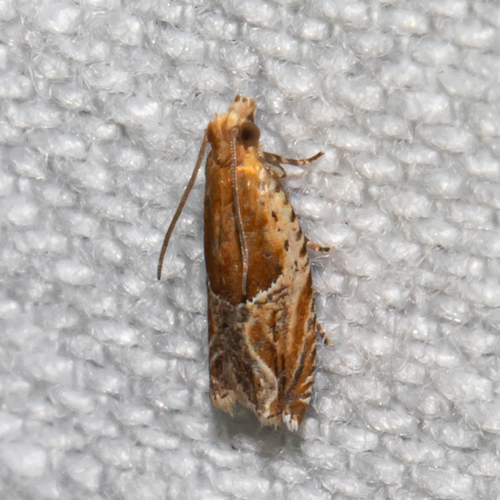
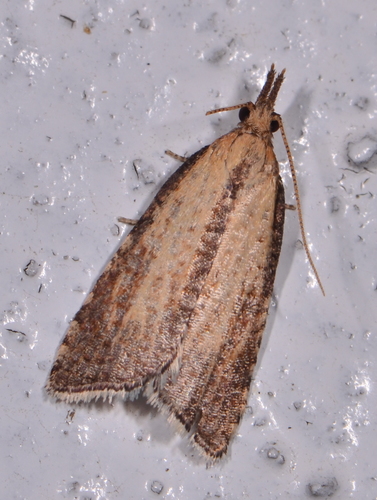
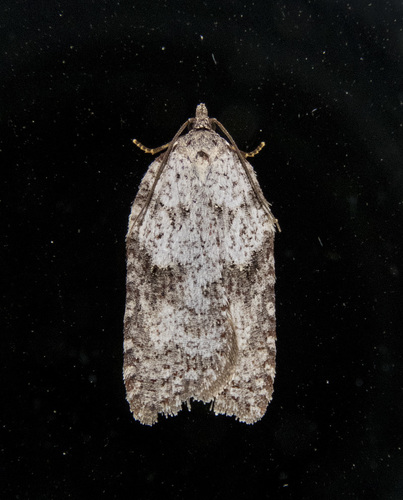
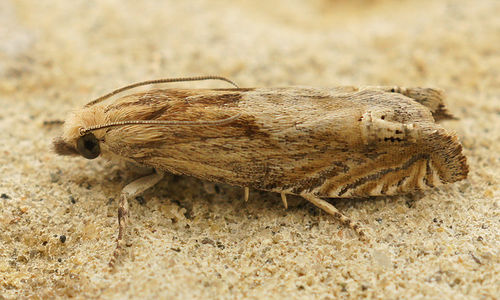
Eucosma cana (Haworth, 1811) is a species of moth. Adults of this species reach a body length of approximately 11.5 mm (0.45 in), with a wingspan of 16–23 mm. The head of these moths is reddish brown. The thorax is light brownish along the sides, and dark brownish in the middle. The ground colour of the forewings is light brown or greyish, marked with light longitudinal discal streaks, and the edges of the forewings are feathered. Hindwings are dark gray toward their margins. This species is quite similar to Eucosma hohenwartiana; E. hohenwartiana has a darker forewing ground colour, and lacks the longitudinal lighter streaks seen in E. cana. Meyrick provided the following more detailed description: The forewings are elongate, with the fold reaching close to the middle. They are ochreous, somewhat sprinkled with blackish, and have several suffused ochreous whitish longitudinal streaks that are confluent in the middle toward the base, and stop before a very narrow central fascia of the ground colour. There is an oblique wedge-shaped ferruginous suffusion from the dorsum near the base. The posterior half of the costa has very oblique whitish strigulae that stop abruptly at one-third. The ocellus has metallic edges, and contains one or two incomplete black dashes. The termen is sinuate. Male hindwings are pale grey, darker toward the terminal end; female hindwings are darker overall. The larva is dull pink, with a brown head and brown second segment plate. This is a common and widespread species. It can be found across most of Europe, in the Chinese provinces of Zhejiang, Fujian, Henan, Guangdong, Yunnan, Shaanxi, Gansu, and Xinjiang, as well as in Japan, Central Asia, Russia, and Kazakhstan. These moths primarily live in flower meadows, rough grounds, and waysides.