About Eucarta amethystina (Hübner, 1803)
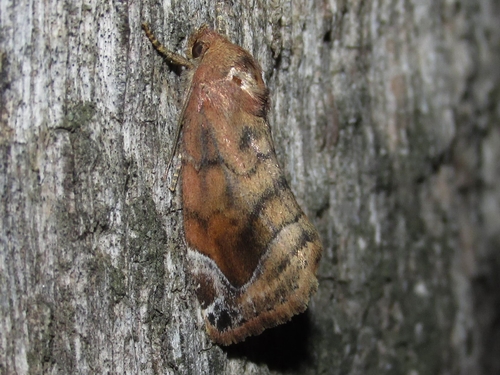
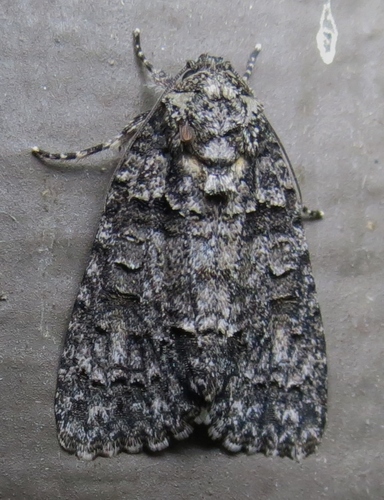
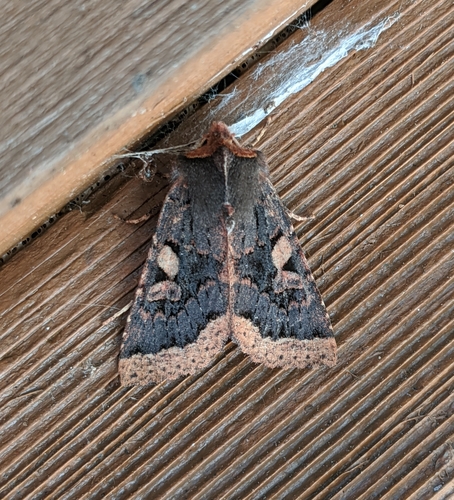
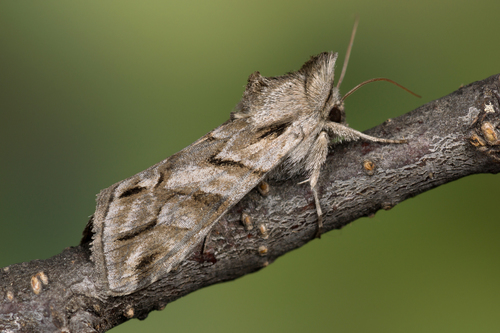
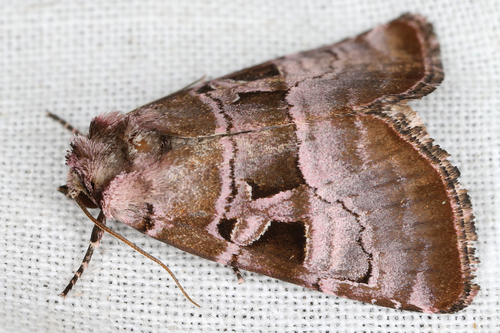
Technical description and variation for Eucarta amethystina (previously referenced as T. amethystina Hbn.): The forewing is olive green suffused with rosy pink. Olive tints are predominant in the basal half of the wing and along the termen. The basal and inner lines are dark olive, edged with rosy pink: the basal line is edged outwardly, while the inner line is edged inwardly. The outer line is dark olive, dentate lunulate, and almost lost in the rosy suffusion. The stigmata are rosy pink, lined with olive; the claviform and orbicular stigmata have white annuli, and all three stigmata are connected by a wedge-shaped pink mark below the median, which is often suffused with olive. The cell and the space below it are deep dark olive. The submarginal line is pinkish, indented on each fold. The fringe is a mix of olive and pink. The hindwing is pale grey, suffused with fuscous olive. The East Asian subspecies, Eucarta amethystina austera subsp. nov., differs from the European form by being much more sombre: its olive shading is stronger and greyer, and its rosy tints are duller. The larva is green. The dorsal line is yellowish, edged with deep green. The subdorsal lines are white. The spiracular line is broad and yellowish, and sometimes tinged with red. The spiracles are black. The larvae feed on the lower leaves of wild carrot and parsley.