About Eucalyptus sieberi L.A.S.Johnson
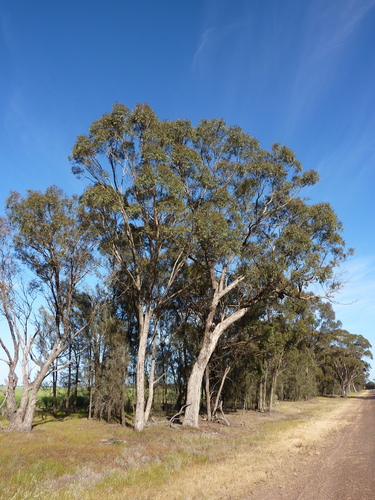
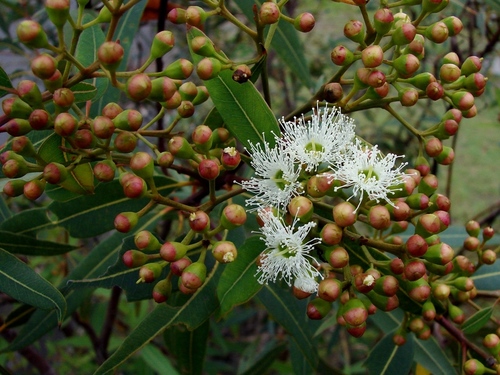
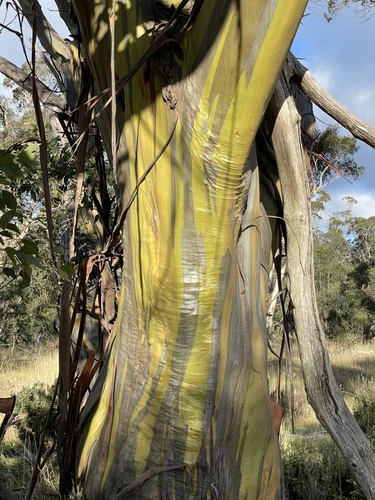
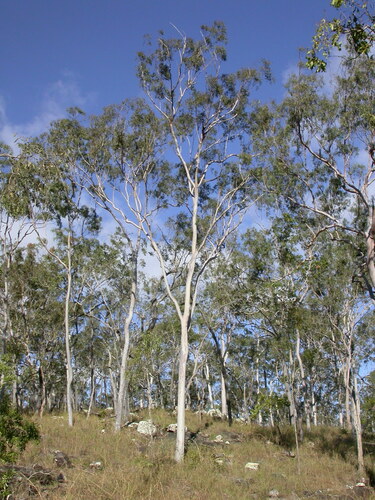
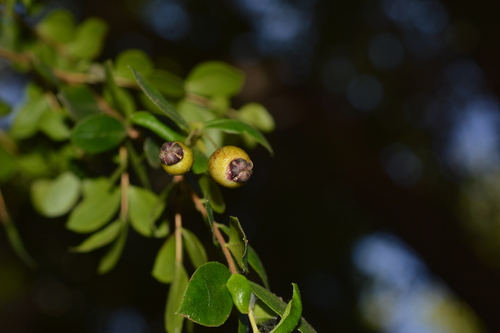
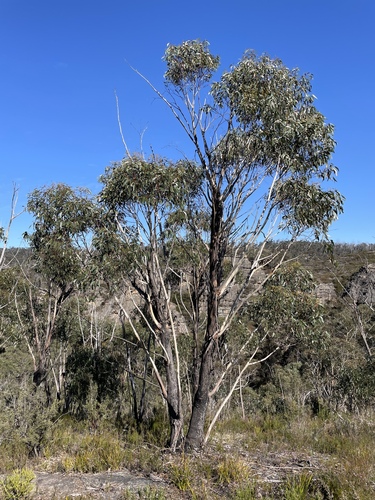
Eucalyptus sieberi, commonly known as silvertop ash, typically grows to a height of 25–45 metres (82–148 feet) and does not form a lignotuber. It has rough bark covering its trunk and larger branches, with smooth, white to yellow bark on growth higher up. On younger trees, the rough bark is thin and flaky; as the tree ages, this bark becomes thick, dark grey to black, and furrowed. Young plants have egg-shaped to lance-shaped or curved leaves that range in colour from bluish green to glaucous, and measure 60–170 millimetres (2.4–6.7 inches) long and 16–75 millimetres (0.63–2.95 inches) wide. Adult leaves are a uniform glossy green on both sides, are lance-shaped to curved, measure 85–195 millimetres (3.3–7.7 inches) long and 12–38 millimetres (0.47–1.50 inches) wide, and grow on a petiole 10–20 millimetres (0.39–0.79 inches) long. Flower buds are arranged in leaf axils in groups of 7 to 15, on an unbranched peduncle 8–16 millimetres (0.31–0.63 inches) long, and each individual bud sits on a pedicel 3–7 millimetres (0.12–0.28 inches) long. Mature buds are oval to club-shaped, 3–5 millimetres (0.12–0.20 inches) long and 3–4 millimetres (0.12–0.16 inches) wide, with a rounded or flattened operculum. Flowering occurs between September and January, and the flowers are white. The fruit is a woody barrel-shaped or conical capsule, 6–11 millimetres (0.24–0.43 inches) long and 6–9 millimetres (0.24–0.35 inches) wide, with valves positioned near the rim of the capsule. Silvertop ash grows in forest and woodland, often forming pure stands, on shallow soils with low to medium fertility. It is native to south-eastern Queensland, the western slopes and plains of New South Wales, the eastern side of the Great Dividing Range in Victoria, and north-eastern Tasmania. The timber of Eucalyptus sieberi is used for general construction, flooring, decking, tool handles, and woodchipping. It is one of the main species processed into export wood chips at Eden for use in writing paper production.