About Eucalyptus piperita Sm.
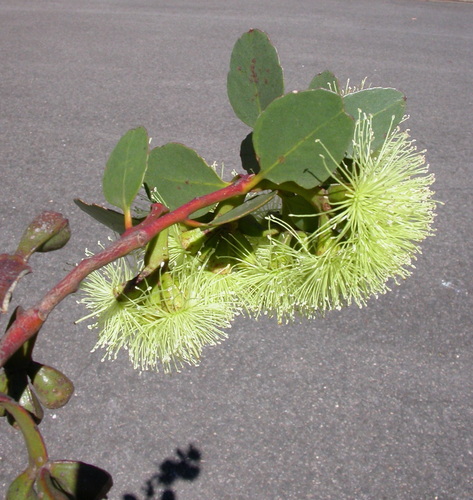
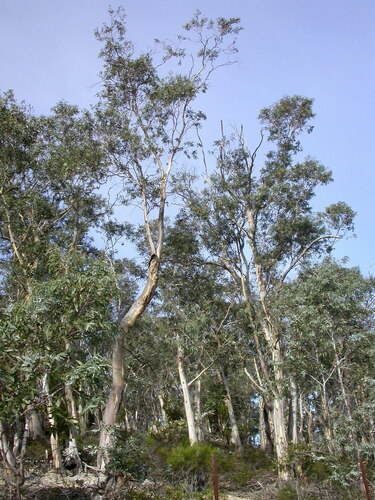
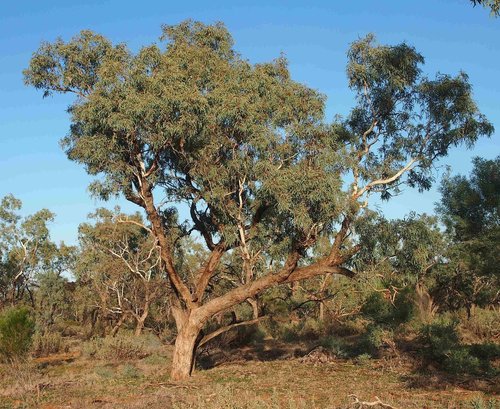
Eucalyptus piperita Sm., commonly known as Sydney peppermint, has grey, rough, finely fibrous bark on its trunk, and smooth white branches. Its adult leaves are dull blue-green and often oblique. Bright yellow-green flowers grow in clusters of seven or more, blooming from late spring to mid summer. The fruit ranges from urceolate (urn shaped) to barrel shaped, and this species occurs especially on valley sides. This eucalypt grows in the tablelands and coastal areas of central and southern New South Wales, particularly on the sides of valleys. The volatile leaf oil of Eucalyptus piperita has been used to treat stomach upsets. The 'type' form of Eucalyptus piperita produces an oil yield of 2.25% by fresh weight, with the oil containing 40–50% piperitone plus phellandrene. Australian botanist Joseph Maiden held the opinion that Dennis Considen, a surgeon with the First Fleet, deserves credit as the first person to recognize the medicinal value of eucalyptus oil extracted from E. piperita growing on the shores of Port Jackson in 1788. This opinion is based on a November 1788 letter Considen wrote to his English colleague Dr Anthony Hamilton, which reads: "... we have a large peppermint tree which is equal if not superior to our English peppermint. I have sent you a specimen of it if there is any merit in applying these and many other simples[sic] to the benefit of the poor wretches here, I certainly claim it, being the first who discovered and recommended them". In 1788, Considen sent an oil sample to England for further evaluation on the return voyage of the Golden Grove. John White, Surgeon General to the Colony, is also credited with the discovery, for documenting the matter and arranging for oil samples to be sent back to England. The two surgeons initially assumed E. piperita had medicinal properties because its fragrance is similar to that of English peppermint.