About Escobedia grandiflora (L.fil.) Kuntze
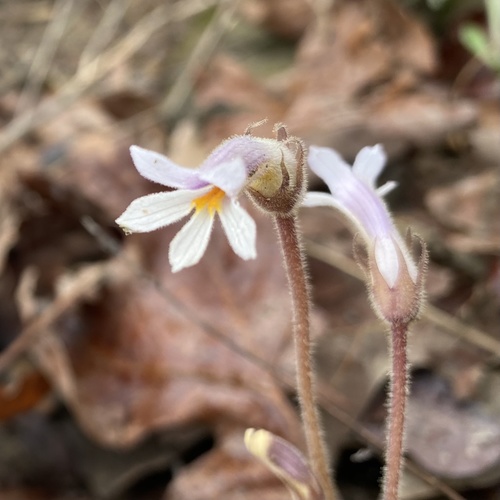
Escobedia grandiflora (L.fil.) Kuntze is an erect herb that acts as an obligate root hemiparasite of a range of host plants. Known host plant families include Asteraceae, Cyperaceae, and Melastomataceae, and the species shows a particular preference for hosts in the family Poaceae. As a hemiparasite, it produces haustoria to attach itself to its host plants. It has opposite, sessile, lanceolate leaves with acute apices and a rough texture. Its flowers are axillary, borne on long pedicels, large in size, and white. Its roots grow from the base of the stem, are cylindrical, and orange in color. Historical records note that E. grandiflora was highly abundant in the American tropics when European colonizers first arrived, and that the species was used as a food dye and medicinal plant. This traditional use persisted in farming communities until the end of the 20th century, when the species was replaced by synthetic dyes and more abundant plant sources. Today, natural populations of E. grandiflora have declined dramatically, and assessment of its conservation status is needed. E. grandiflora is distributed across the Americas, occurring in Argentina, Bolivia, Brazil, Colombia, Costa Rica, Ecuador, Guatemala, Mexico, Panama, Paraguay, Peru, and Venezuela. A study of Brazilian grasslands found clear differences in plant community composition between sites with and without E. grandiflora. Quadrats containing E. grandiflora had higher species richness, higher Shannon's diversity, and greater Pielou's evenness across multiple functional plant groups. The presence of E. grandiflora was also correlated with a noticeable reduction in the percentage of dominance held by the most common plant species in the studied grasslands. These results show a clear association between this neotropical hemiparasite and the structural dynamics of grassland plant communities, with higher plant diversity and altered species dominance occurring where E. grandiflora is present. Local communities in the Americas use the roots of E. grandiflora as a seasoning, a food colorant, and a medicine. This species is frequently confused with turmeric (Curcuma longa), an introduced species that has become well adapted to the American continent. In industrial food production, E. grandiflora is used to color cheese, margarine, and butter. In traditional folk medicine, it is used to treat jaundice, hepatitis, and other liver diseases.