About Erythronium grandiflorum Pursh
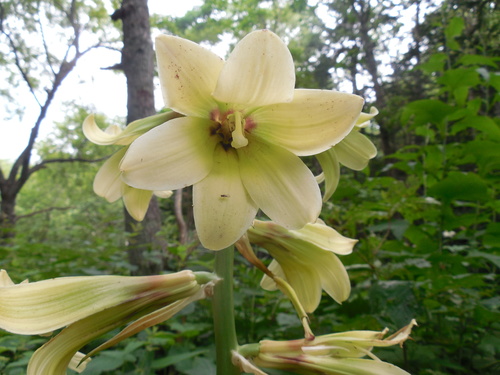
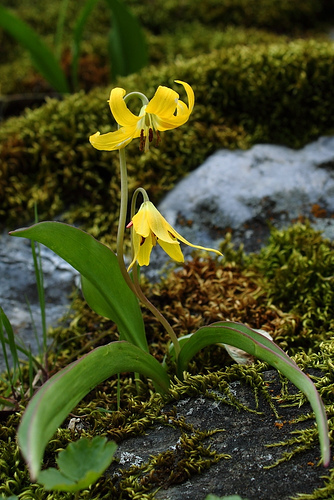
Erythronium grandiflorum grows from a deep bulb (or corm) that measures 3 to 5 centimeters wide. It produces two wavy-edged green leaves that grow up to 20 centimeters long. The flower stalk can reach 30 centimeters in height, and holds between one and three showy flowers. Each bloom has bright lemon yellow petals, white stamens with large anthers that range in color from white to yellow to red, and a white style. This species is native to western North America, ranging from British Columbia and Alberta in the north south to New Mexico and California; it has never been recorded growing in Arizona or Nevada. It grows in subalpine mountain meadows, slopes, and clearings. The flowers are pollinated by bumblebees and other types of bees. The bulbs are an important preferred food source for grizzly bears, and mule deer regularly eat the plant's foliage. After hummingbirds complete their annual 1,500-mile migration from Mexico to the Rocky Mountains of Colorado, they gain energy from the nectar of these lilies. Rising temperatures caused by global warming are making these flowers bloom and wither earlier each year. As of 2023, researchers predict that within 20 years, the migrating birds may arrive to find that this normally reliable source of nourishment is no longer available due to premature withering. The bulbs were traditionally an important food source for many Indigenous Nations of western North America. Harvesters collected the bulbs when the plants were bearing fruit, and the bulbs were often pit cooked, then dried and stored for later use. They can also be prepared by boiling.