About Erythrina sandwicensis O.Deg.
Nomenclature & Common Name
Erythrina sandwicensis O.Deg., commonly known as wiliwili, grows to a height of 4.5–9 m (15–30 ft), with a gnarled, stout trunk that reaches 0.3–0.9 m (0.98–2.95 ft) in diameter.
General Bark Characteristics
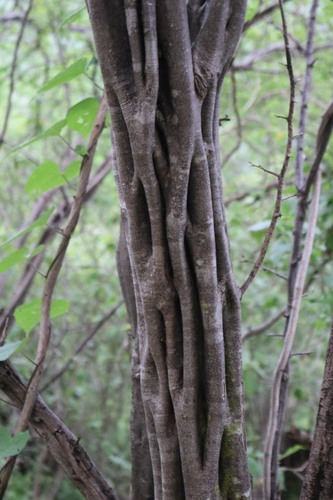
Its bark is smooth, slightly fissured, and covered in gray or black spines up to 1 cm (0.39 in) long.
Mature Trunk Bark Tint
The bark of the main trunk on mature trees has a distinct orange tint, which is caused by a terrestrial alga.
Deciduous Habit
Wiliwili is drought deciduous during the summer dry season.
Wild Tree Leaf Loss Pattern
The dry season typically begins in late April or May, and wild wiliwili trees usually lose all of their leaves before they bloom.
Cultivated Tree Leaf Retention
Cultivated wiliwili trees may retain most of their foliage through the blooming period.
Flowering Period & Inflorescence Structure
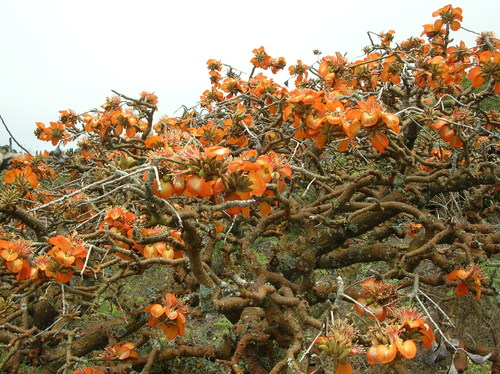
Flowers appear in the first half of the dry season, from April to July, growing on horizontal or nearly horizontal racemes that are 7.5–15 cm (3.0–5.9 in) long.
Flower Color Variation
Flower colors can include orange, yellow, salmon, greenish, or whitish, and all of these colors can sometimes occur within a single population.
Standard Petal Morphology
The standard petal is erect and does not enclose the other petals.
Genus-Level Pollination Trait
Like all species in the Erythrina genus, wiliwili is pollinated by birds.
Passerine Pollination Adaptations
Its horizontal raceme and erect standard are adaptations for pollination by passerine birds.
Related Erythrina Pollinators
Most other erythrinas are pollinated by hummingbirds, which are not native to Hawaii.
Pod Development Post-Flowering
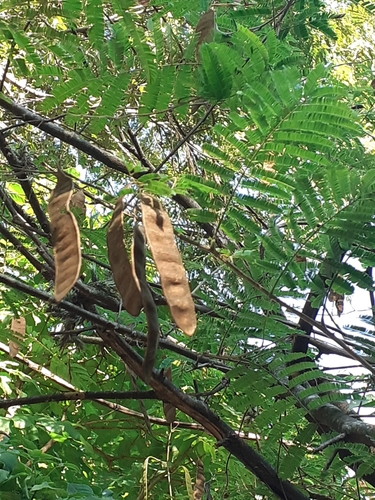
After flowering, pods develop and remain on the tree, with seeds staying attached long after the pods open.
Seed Dispersal Trigger
Seeds are dislodged by heavy rain, which generally starts around November in the Hawaiian Islands.
Seed Germination & Seedling Growth
Many seeds germinate quickly, and a well-established seedling can grow to 1.2 m (4 ft) tall before the start of the next dry season.
Unusual Spine Presence
The presence of spines on wiliwili is unusual for a plant species that evolved in the isolated Hawaiian Islands, where ungulates and other large herbivores are not native.
Spine Loss in Hawaiian Flora
As a result, many Hawaiian plants have lost the protective trait of spines over evolution.
Closely Related Species
Wiliwili is thought to be closely related to E. tahitensis, a tree endemic to the Tahitian Archipelago, and E. velutina, a widespread species found in tropical South America and the Caribbean.
Cultivation & Propagation
Wiliwili is occasionally grown in cultivation in Hawaii and can be easily propagated from cuttings.
Introduced Erythrina Gall Wasp Impact
Seven other Erythrina species were once widely cultivated across the Hawaiian Islands, but most have been eliminated by the non-native gall wasp (see Conservation section below).
Introduced Erythrina Historical Uses
These introduced species were popular as street trees in dry areas and as windbreaks for fields.
Erythrina in Botanical Gardens
At least 80 additional Erythrina species have been recorded growing in Hawaiian botanical gardens.
Naturalized Non-Native Erythrina Status
No non-native Erythrina species are known to be naturalized in Hawaii.
Wiliwili Pod & Seed Traits
Wiliwili can be told apart from the seven other cultivated Erythrina species by its pods, which hold only one to three red or yellow-orange seeds that sink in water.
Non-Native Erythrina Seed Traits
Non-native Erythrina have pods with a larger number of brown seeds that float in water.
Traditional Wood Use Rationale
Native Hawaiians used wiliwili wood for a variety of items because of its low density.
General Traditional Wood Products
These items include mouo (fishing net floats), ama (outrigger canoe floats), and extremely long surfboards called olo (papa heʻe nalu).
Olo Surfboard Specifications
Olo averaged 18 feet (5.5 m) in length and were ridden exclusively by aliʻi (royalty).
Canoe Hull Wood Use
Wiliwili wood was sometimes also used for the waʻa (hull) of outrigger canoes meant for near-shore use, recreation, or training.
Traditional Seed Use
The shiny orange-red seeds of wiliwili were strung into lei.