About Erythranthe lutea (L.) G.L.Nesom
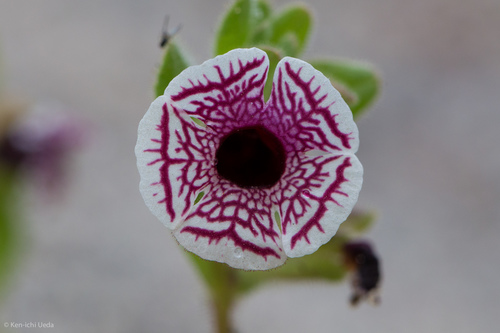
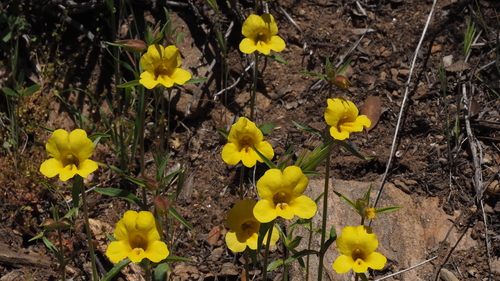
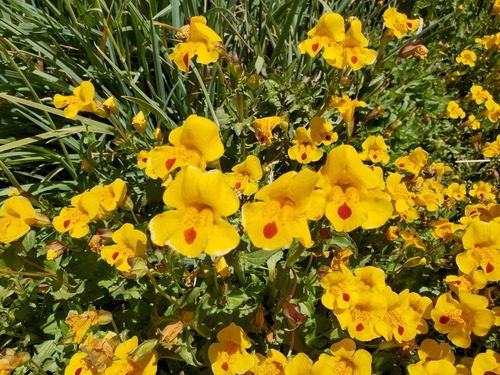
Erythranthe lutea blooms in summer and reaches approximately 30 centimetres (12 inches) in height. Its flowers are yellow with irregular red blotches, while its leaves are hairy, paired, and round. Because of its yellow petals, this species belongs to the "yellow monkeyflower" group, which differs from most other members of its genus, which typically have red or pink petals. Some sources recognize Erythranthe lutea as a separate species due to chromosomal variations. In 2012, Barker et al. proposed a new taxonomic classification for the family Phrymaceae, which left only 7 species in the genus Mimulus, eliminated the species Mimulus lutea, and moved 111 species into the genus Erythranthe. This proposal also included 4 different options for implementing the new taxonomic framework. The luteus group within Erythranthe consists of Erythranthe lutea var. variegatus, E. naiandina, and E. cupreus. Erythranthe lutea prefers to grow in wet habitats, including marshes and riverbanks. It is native to temperate South America, where it occurs in Chile and western and southern Argentina. It has become naturalized in Britain, where it was first cultivated around 1826.