About Erysiphe necator Schwein.
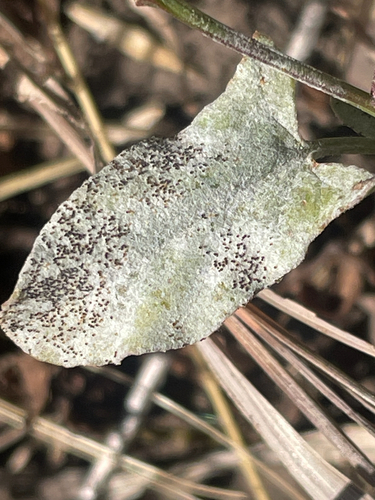
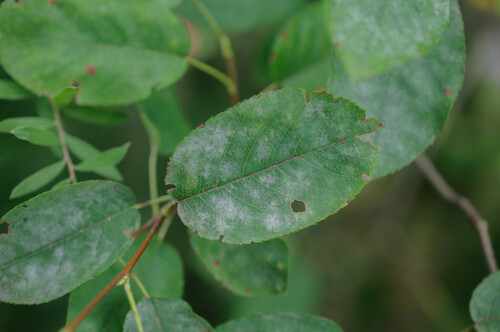
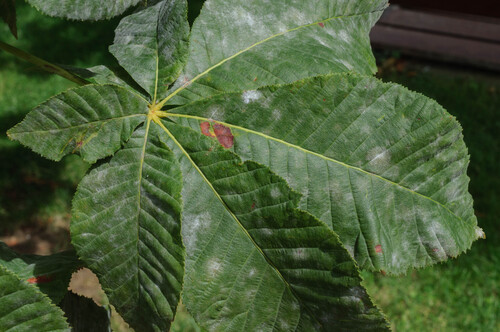
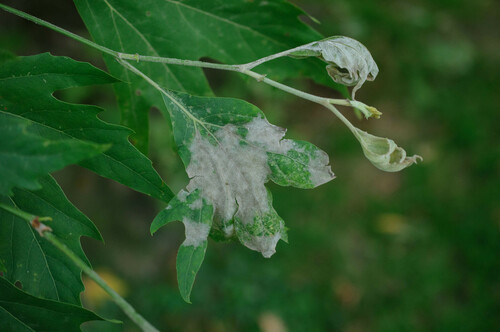
Erysiphe necator Schwein., also known by the synonym Uncinula necator, is a fungus that causes grape powdery mildew. It is a common pathogen of Vitis species, including the wine grape Vitis vinifera. This fungus is thought to have originated in North America, and European varieties of Vitis vinifera have varying levels of susceptibility to it. Erysiphe necator can infect all green grapevine tissue, including leaves and young berries. If left untreated, it leads to crop loss and reduced wine quality. To release ascospores from its cleistothecia in spring, the sexual stage of this pathogen requires free moisture. However, free moisture is not needed for secondary spread via conidia; high atmospheric humidity is enough for this step. This fungus produces two common odorous compounds: 1-octen-3-one and (Z)-1,5-octadien-3-one. Grape powdery mildew can be treated with sulfur or fungicides, but the pathogen has developed resistance to several chemical classes, including Benomyl, DMIs, and Strobilurins. While synthetic fungicides are often recommended for application around bloom, sulfur is commonly added to tank mixes to support resistance management. Grape powdery mildew thrives in warm, moist environments, and it most often infects younger plant tissues, including fruit, leaves, green stems, and buds. Free water disrupts conidia, and infection only requires a humid microclimate. Most initial infections occur when 2.5 mm of spring rain falls and temperatures are approximately 15 °C or higher. Infection rates drop at temperatures above 30 °C, because water evaporates quickly under these conditions. Cooler conditions such as shading and poor aeration encourage infection by raising relative humidity, which is optimal at 85% or greater. Sporulation can still occur at relative humidity as low as 40%. Spores are mainly dispersed by wind and rain splash. Young, underdeveloped tissues, primarily leaves and fruit, are the most susceptible to infection. Warm-climate Vitis vinifera cultivars and French hybrids offer the pathogen overwintering protection in buds during moderate winter climates. American grape cultivars are generally less susceptible to infection, unless unusually warm winter conditions fail to kill chasmothecia in buds. Most chasmothecia survive on the vine, where the bark provides ample protection.