About Erysimum crepidifolium Rchb.
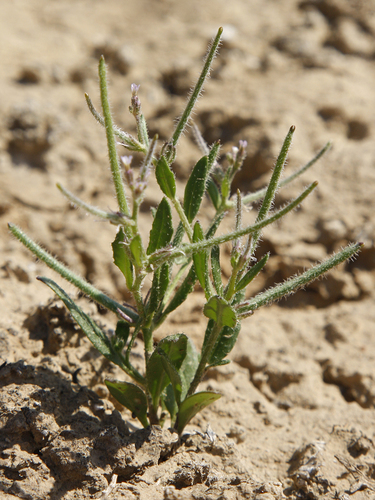
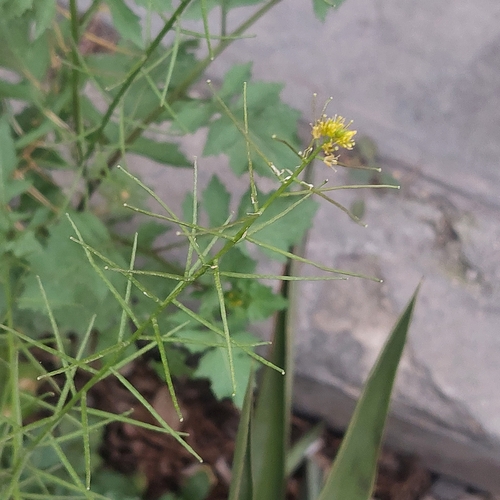
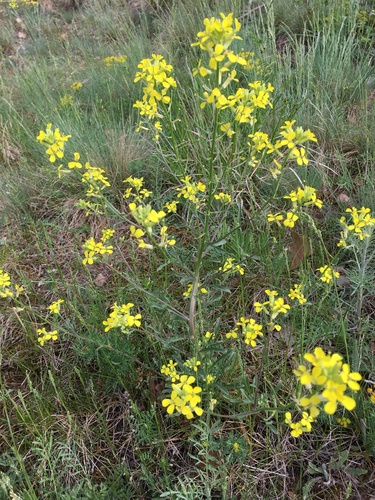
Erysimum crepidifolium Rchb. is an annual to short-lived herbaceous perennial with upright stems that grow up to 60 centimeters tall. Its leaves are hirsute, with leaf margins that can range from toothed to smooth-edged. Flowering occurs primarily between April and July, though plants may also flower in fall less commonly. The flowers are odorless, relatively large, measuring 9 to 15 mm in length, and have four pale yellow petals. This species has six anthers. Its seed pods measure 20 to 70 mm, are gray-green, four-sided with rounded corners, and attach via 3 to 5 mm stems. Erysimum crepidifolium has a chromosome number of 2n = 14. Like most other members of the genus Erysimum, E. crepidifolium contains cardiac glycosides called cardenolides, as well as glucosinolates. All parts of this plant are toxic because of their cardenolide content. At least 20 different cardenolides are found in the plant's seeds, making up approximately 3.5% of the seeds' total mass. The most abundant cardenolides are erysimoside, which makes up around 2.3% of seed mass, and its deglycosylated form helveticoside, which makes up 0.5 to 1.2% of seed mass. The highest concentrations of both erysimoside and helveticoside occur during seed ripening and in dried seeds. Among 48 tested Erysimum species, E. crepidifolium had the highest cardenolide content in its leaves, with a content at least three times higher than any of the other tested species. Toxicity to humans has not been reported, but mass die-offs of geese that consumed this plant are well documented. Consumption of E. crepidifolium causes muscle paralysis in geese that eventually leads to death; this is the origin of its German common name "Gänsesterbe", meaning geese death. Rabbits are also considered susceptible to this plant's toxicity, but chickens are reportedly resistant.