About Erysimum cheiri (L.) Crantz
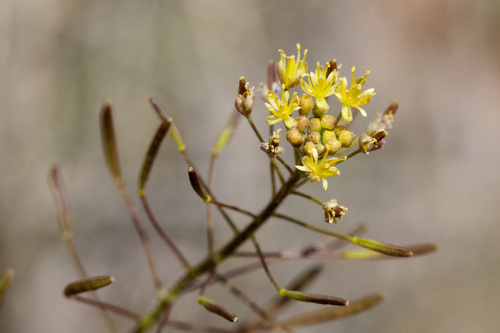
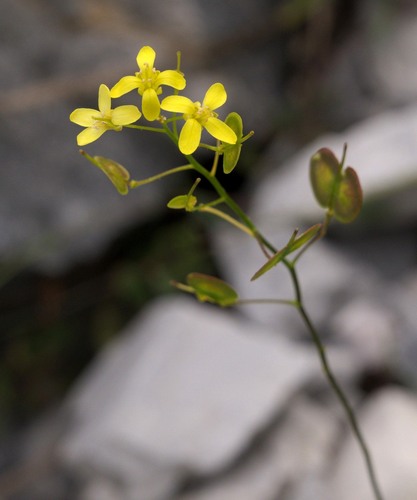
Erysimum cheiri (L.) Crantz is a herbaceous perennial plant, often grown as a biennial. It produces one or more highly branching stems that grow between 15 and 80 cm (6 to 31 inches) tall. Upright to ascending shoot axes may become woody (lignify) in their lower section. Lower leaves form a rosette, have short stalks, and reach up to 10 centimeters long; they are lanceolate in shape and covered in double-stranded hairs. Leaves along the stem are crowded, much smaller, and nearly sessile. Overall leaves are generally narrow and pointed, and can grow up to 20 cm (8 inches) long. This species, commonly called wallflower, is originally native to south-east Europe, particularly the Mediterranean basin, where it grows wild in rock corridors. It is a garden escape (garden refugee) that has become naturalized as an archaeophyte in the wild in Central Europe. In Central Europe it occurs mainly in warmer areas, but currently only grows in scattered populations. It is a popular ornamental plant, widely cultivated for its abundant, fragrant spring flowers. Many cultivars have been developed, with flower shades including yellow, orange, red, maroon, purple, brown, white, and cream. It pairs well with other spring flowers like tulips and forget-me-nots in garden bedding schemes. It is typically grown as a biennial: sown one year to flower the next, then discarded. This practice comes partly from its tendency to grow spindly and leggy during its second year, and more importantly from its susceptibility to infections such as clubroot.