About Erynnis persius (Scudder, 1863)
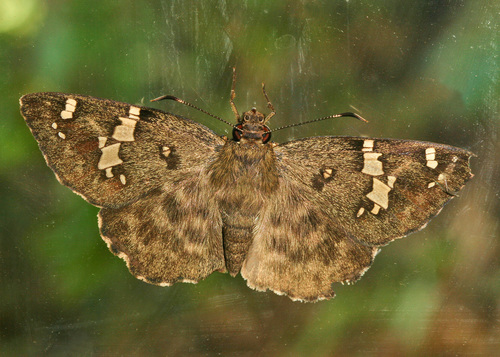
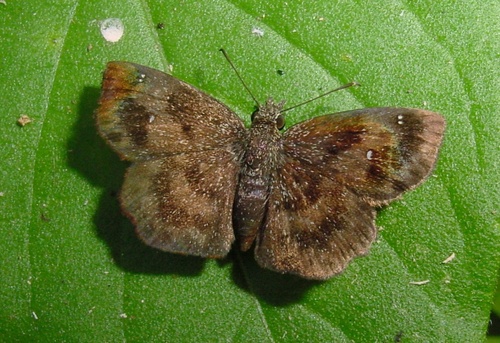
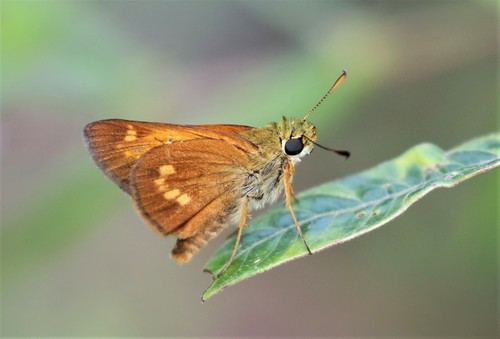
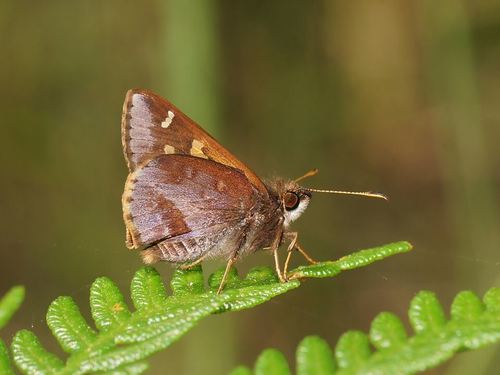
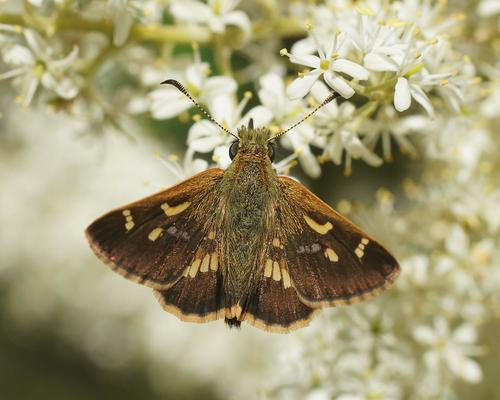
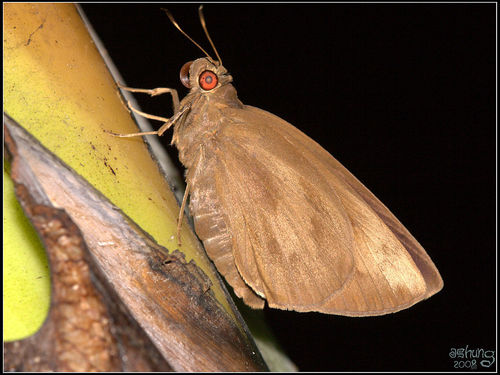
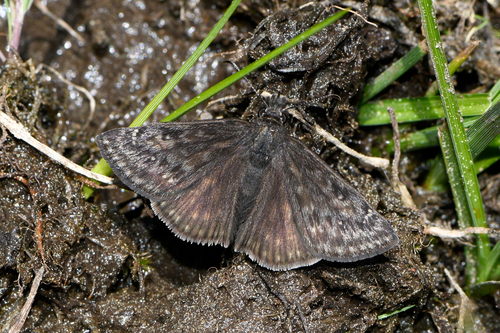
Erynnis persius, commonly known as the Persius Duskywing, has dark brown upper surfaces on both its forewings and hindwings. The forewing has distinct clear spots, along with other faint markings, and a gray patch at the end of the cell. Males have raised white hairs on their forewings. The hindwings have two types of fringes: an outer fringe of darker brown to black, and an inner creamy white fringe. Females have a scent scale patch on their 7th abdominal segment. This species can be hard to tell apart from other duskywing skippers. The caterpillars of this species are light green with a reddish tint, covered in fine, short hairs, and have an entirely brownish black head. The Persius Duskywing has a broad range across North America. Its range extends from Alaska to southeastern Manitoba, covers most of the western United States, and reaches south to Arizona and New Mexico. Its eastern population ranges from New England west to Wisconsin, and south to Virginia. This species produces one generation per year. Mature larvae hibernate, and pupation occurs between April and June. Males find females by perching on the ground or low vegetation, and females lay their eggs on the vegetation of host plants. Caterpillar host plants include lupines (Lupinus), golden banner (Thermopsis), Lotus, and other legumes. Adult Persius Duskwings feed on flower nectar. The larval form of the subspecies Erynnis persius persius is dependent on wild blue lupine, Lupinus perennis, as a host plant.