About Erynnis horatius (Scudder & Burgess, 1870)
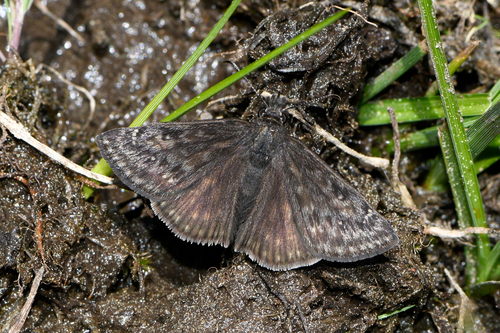
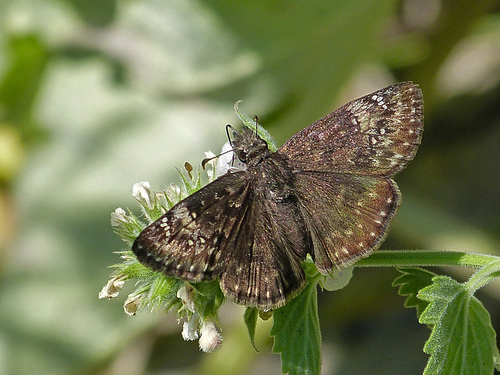
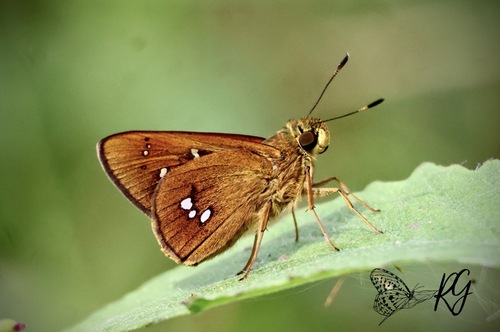
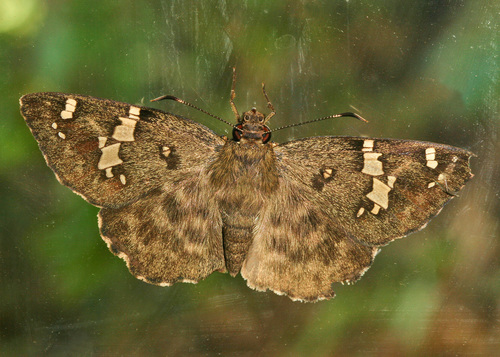
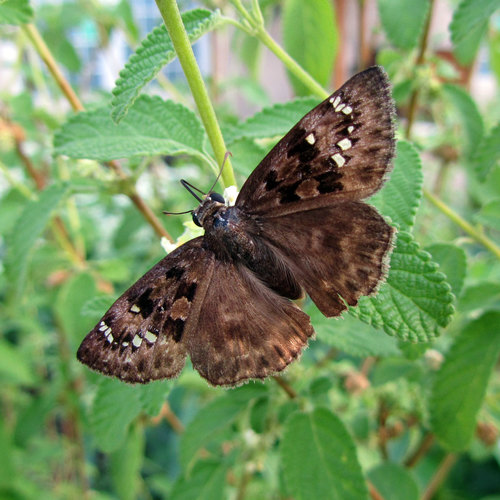
Erynnis horatius, commonly known as Horace's duskywing, is a butterfly species belonging to the family Hesperiidae. Within the United States, its range extends from Massachusetts to Florida, and westward to eastern South Dakota, the Gulf Coast, southeastern Utah, Colorado, northeastern Arizona, and New Mexico. It holds the protected status of a species of special concern in the U.S. state of Connecticut. This species has brown fringes. On the upperside of the male's forewing, the color is dark brown with very little contrast, and it has no white overscaling. On the upperside of the female's forewing, the color is light brown with a contrasting pattern and large transparent spots. The underside of the hindwing usually does not have two spots below the apex. Males have a costal fold that holds yellow scent scales, while females have a patch of scent scales on the 7th abdominal segment. The wingspan of Horace's duskywing ranges from 36 to 49 mm. In the northern part of its range, there are two generations per year, with adults active from April to September. In the deep southern United States and Texas, there are three generations per year, with adults active from January to November. Adult Horace's duskywing favor habitats including open woodlands and woodland edges, clearings, fence rows, wooded swamps, power-line right-of-ways, open fields, and roadsides. Caterpillars of this species feed on a variety of oak species: willow oak (Quercus phellos), northern red oak (Quercus velutina), scrub oak (Quercus ilicifolia), water oak (Quercus nigra), post oak (Quercus stellata), and live oak (Quercus virginiana). Adult butterflies feed on nectar from flowers that grow up to around 4.5 feet (1.4 m) above ground, including flowers of dogbane, buttonbush, sneezeweed, goldenrod, peppermint, boneset, and winter cress.