About Eris militaris (Hentz, 1845)
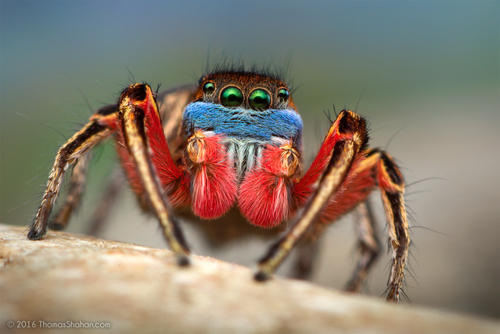
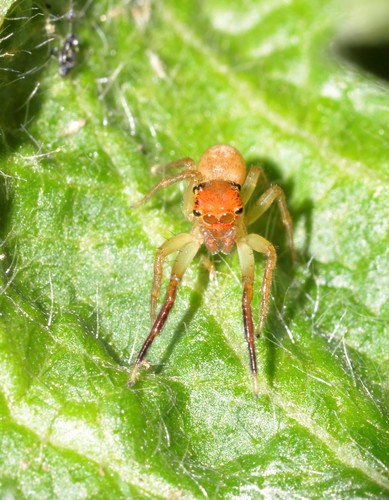
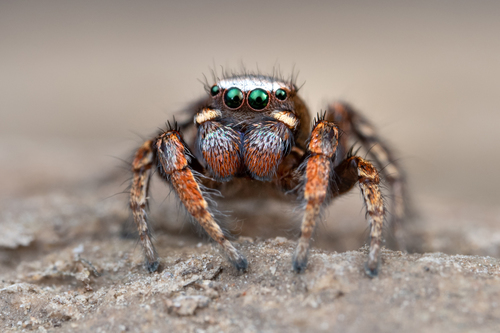
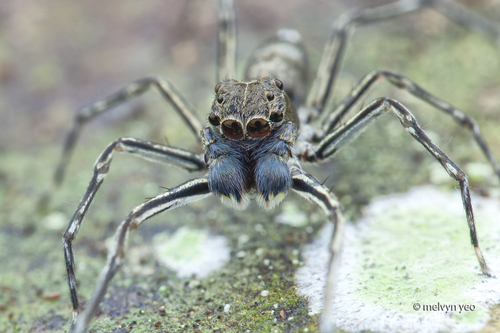
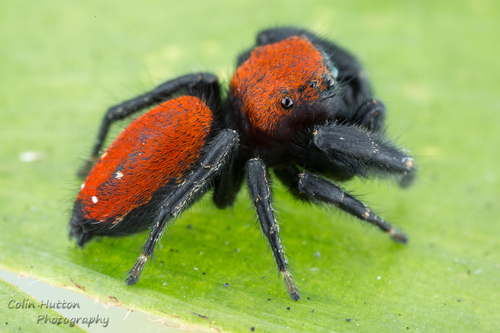
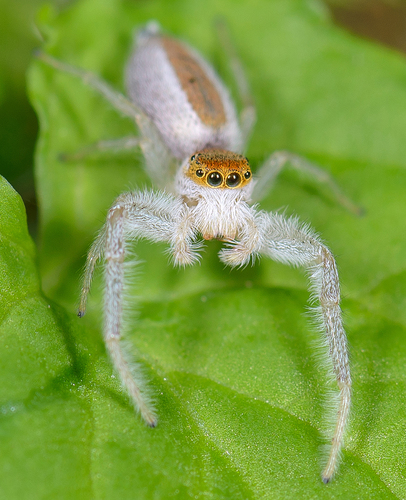
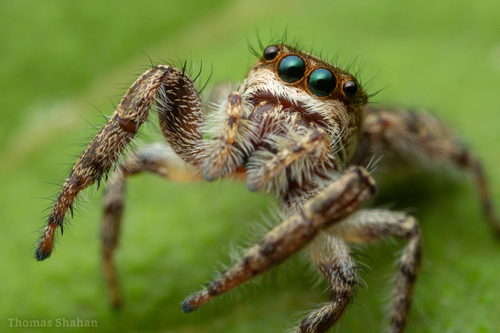
Eris militaris (Hentz, 1845) shows sexual dimorphism in physical appearance. The most notable difference between males and females is in the coloration of the cephalothorax: female cephalothoraxes are lighter in color, while male cephalothoraxes are darker. Female abdomens are slightly darker and have multiple white spots on the dorsal side. Males have lighter abdomens, and their darker cephalothoraxes have white bands along the sides. These white side bands are absent from the female's cephalothorax, but are present on the female's abdomen. Males have long, fang-bearing chelicerae positioned at the front of the cephalothorax. In terms of body length, males measure between 4.7 and 6.7 millimeters, while females range from 6 to 8 millimeters. Eris militaris is distributed across the United States and Canada. In autumn, they are commonly seen walking both inside and outside buildings. They also inhabit sheltered hidden areas, such as overlapping leaf shelters in blackberry bushes.