About Eriogonum parvifolium Sm.
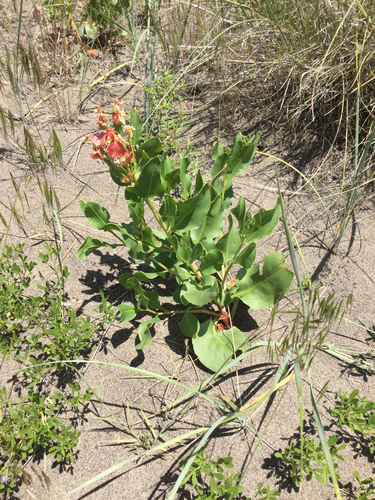
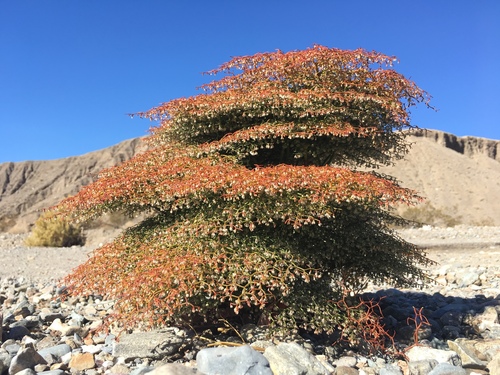
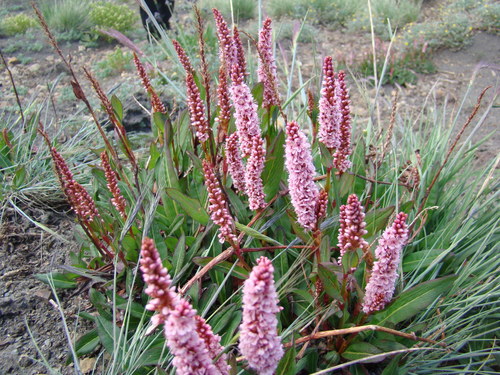
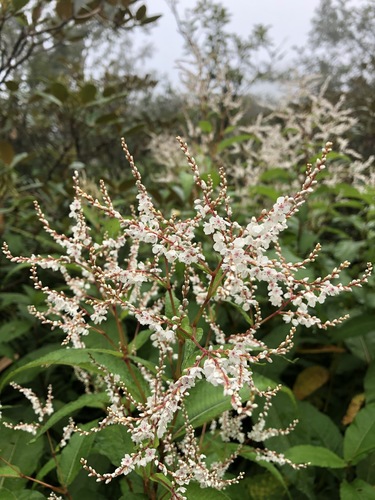
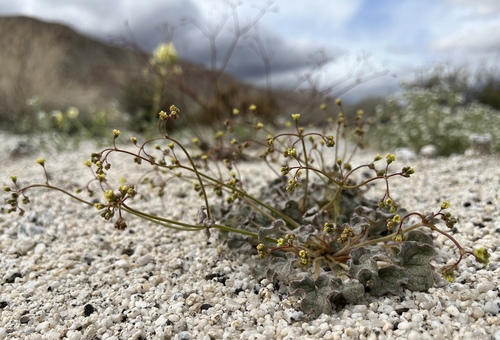
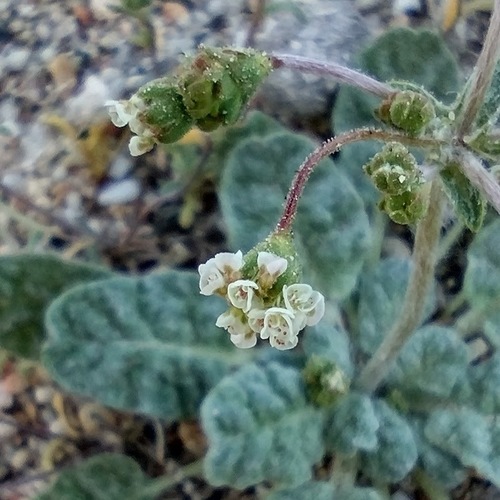
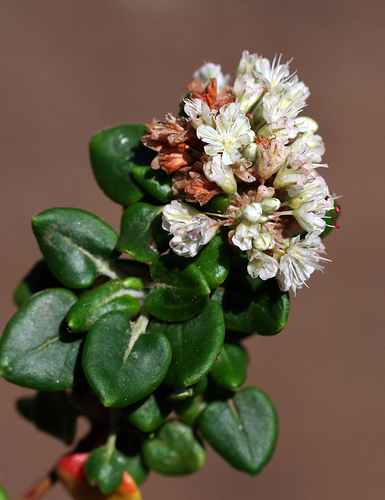
This species, scientifically named Eriogonum parvifolium Sm., is also commonly known as dune buckwheat. Its thick stem leaves measure 5 to 30 millimeters, and can range in shape from lanceolate to rounded. Some leaves fold under, giving them a more or less triangular appearance. The upper leaf surfaces are smooth, while the lower surfaces are woolly. The foliage is green with a reddish tinge. Its flowers range in color from white to pinkish or yellowish-green. The perianth measures 2.5 to 3.0 millimeters, and the plant's glabrous fruits are 2.5 to 3.0 millimeters across. Eriogonum parvifolium grows naturally in sandy soils with a pH between 5 and 8, meaning it tolerates mildly acidic to mildly alkaline conditions. When grown in cultivation, it can tolerate clay soils. This shrub grows in partial to full sun in natural conditions, but can tolerate shade when cultivated. Deer do not eat this plant, but many smaller animals consume its flowers, fruits, and leaves. It thrives in areas that receive 39 to 78 centimeters of rainfall per year. Dune buckwheat is a host plant for a wide variety of insects, leading to intense competition between different insect species that use it. It specifically acts as a host plant for ten different Lepidoptera species, including the El Segundo blue butterfly and Smith's blue butterfly. For the El Segundo blue butterfly, it is the only host plant used by the species across all of its life stages.