About Eriocoma hymenoides (Roem. & Schult.) Rydb.
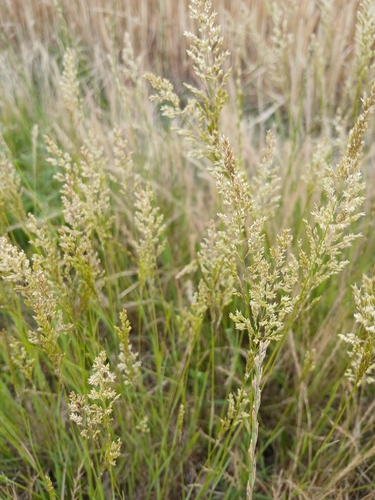
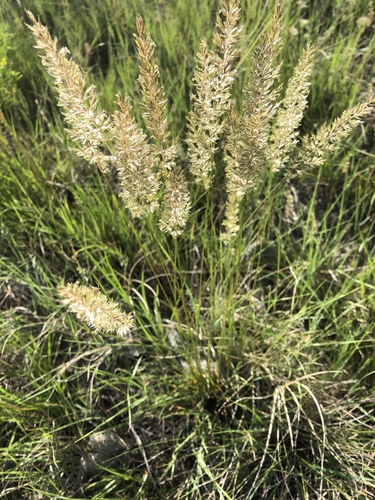
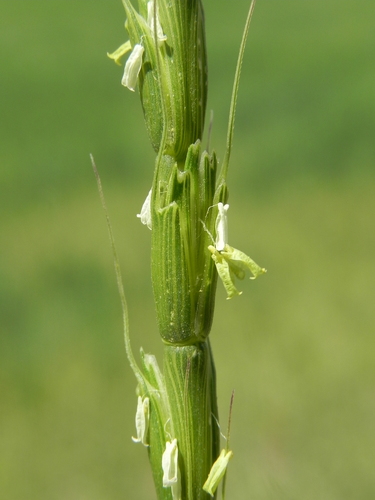
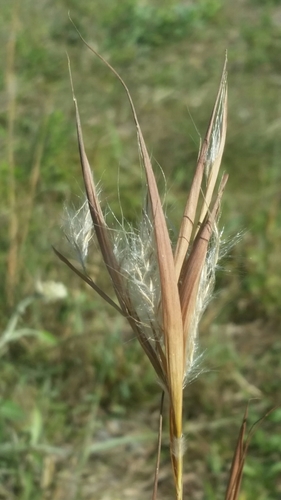
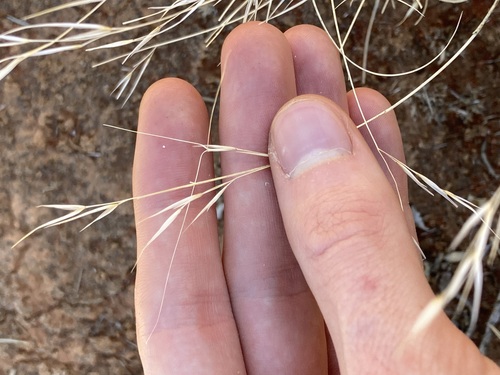
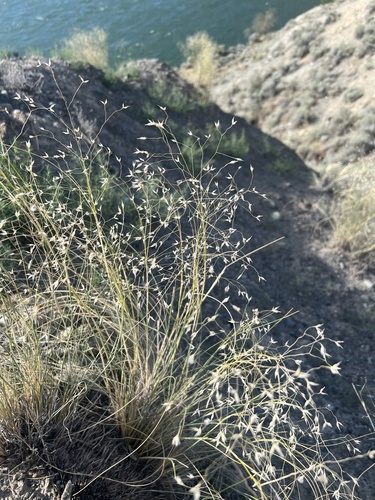
Eriocoma hymenoides (Roem. & Schult.) Rydb., commonly called Indian ricegrass, is a grass species with the following characteristics. In the wild, it typically grows 10 to 61 centimetres (4 to 24 inches) tall and 20 to 30 cm (8 to 12 in) wide. It produces narrow, rolled leaf blades. This species is native to western North America, growing east of the Cascades from British Columbia and Alberta south to southern California, northeastern Mexico, and Texas. It can grow in a wide range of habitats, from desert scrub to ponderosa pine forests, and tolerates soils ranging from sandy to clayey in texture. It is also capable of stabilizing shifting sand. Indian ricegrass is an important food source for wild grazing animals including bison, bighorn sheep, elk, mule deer, pronghorns, and jackrabbits. For some of these species, it is especially vital in late winter, because it produces green shoots earlier than other grasses. Its seeds are heavily consumed by many types of rodents and birds. Rodents that cache seeds may improve the seedling survival and long-term survival of this plant species. Cattle preferentially eat Indian ricegrass, so it is often lost early in areas that experience overgrazing. In the past, this grass served as a staple food for Native Americans, particularly for non-agricultural tribes, and when maize crops failed. Groups gathered the grass’s seeds, ground them into meal or flour, and used the resulting product to make bread. The Zuni people specifically used ground Indian ricegrass seeds as a staple before corn became available to them. Since 2000, this ricegrass has been cultivated in Montana and sold under the trade name Montina as a gluten-free grain.