About Eriocephalus africanus L.
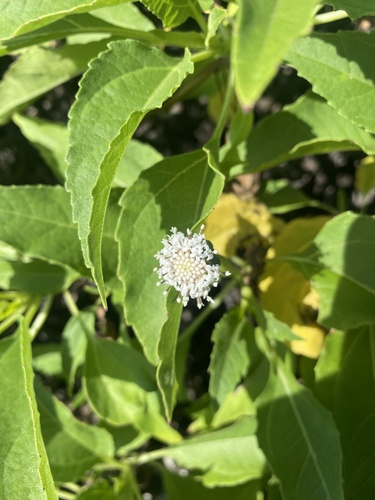
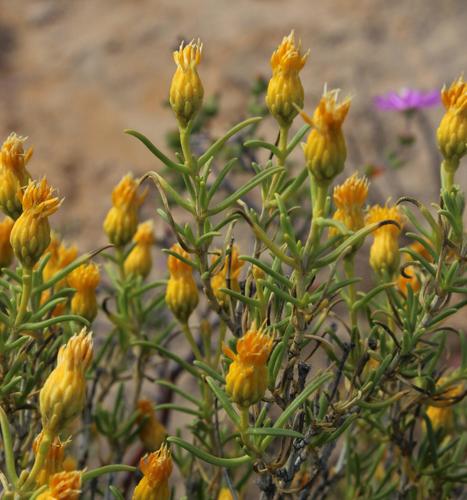
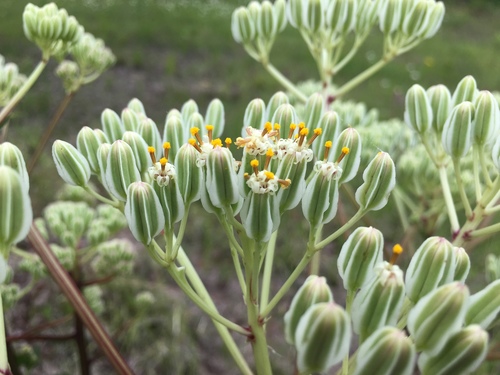
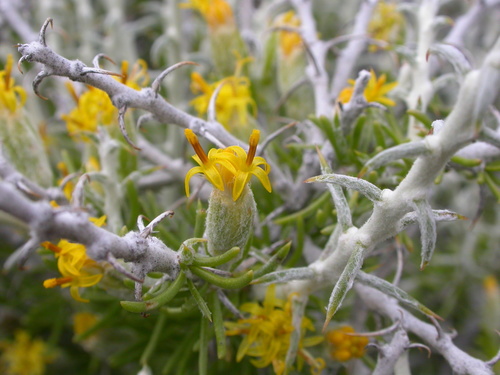
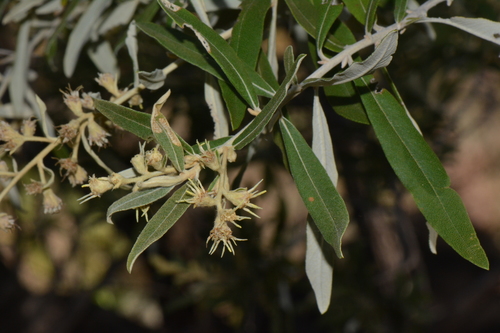
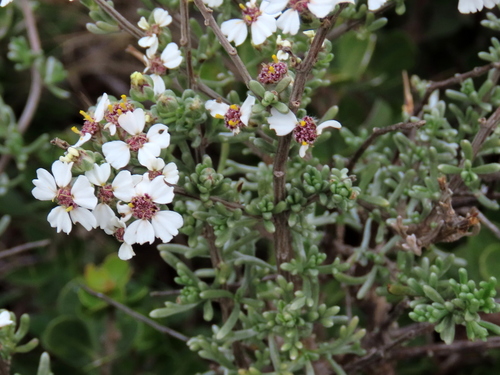
Eriocephalus africanus L. is a bushy shrublet native to South Africa. It is widely distributed across the Western and Eastern Cape, as well as Namaqualand. This species has multiple common names across different languages, including Kapokbossie and Wild Rosemary; in Afrikaans it is called wilde roosmaryn, a name that references its perceived resemblance to common Mediterranean rosemary. This similarity is only superficial, seen in the growth habit of the foliage. While the foliage of E. africanus is softer and non-glossy, it grows in a similar form to rosemary, though the two species are not closely related. Eriocephalus africanus is fragrant, and its lightly felted foliage gives the plant a matte silvery look. Its inflorescences are small, brown and pale yellow flower heads carried in corymbs. Each head holds a small number of bisexual ray florets that have non-functional ovaries and bright white petals; when in flower, these petals almost completely cover the bush. The ray florets surround a central group of typically four to eight female florets. Ecologically, this plant is an important source of nectar and pollen for many insects, and it serves as a minor browse food for sheep flocks and antelope. Essential oil extracted from E. africanus is used as an ingredient in medicinal products and perfumes. The plant has also been used in traditional medicine and in cooking.