About Eriocaulon parkeri B.L.Rob.
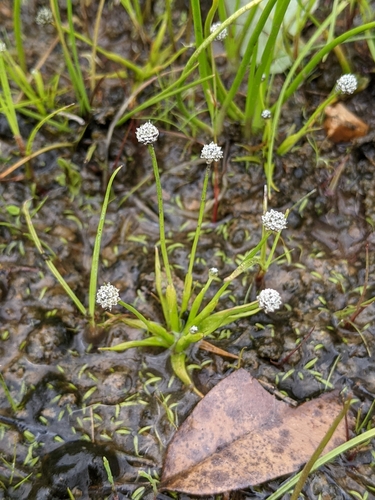
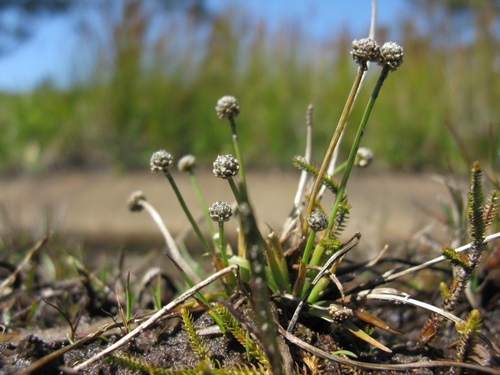
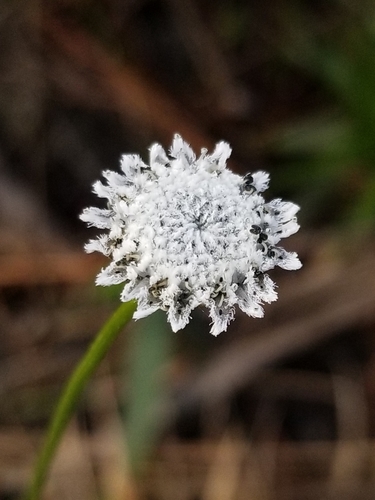
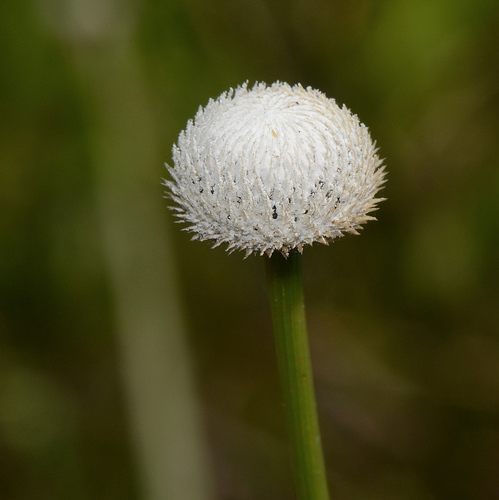
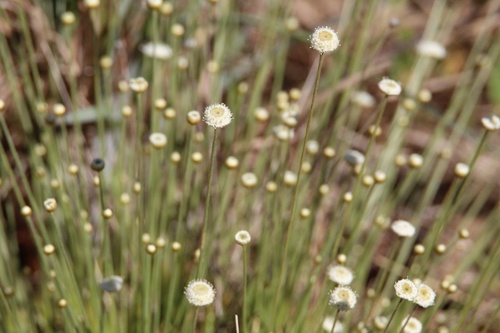
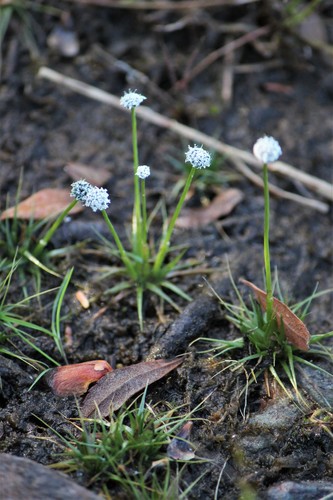
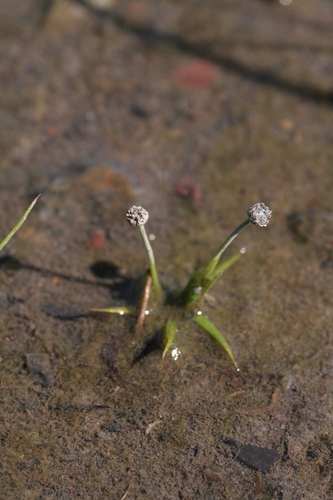
Eriocaulon parkeri B.L.Rob. is a species of flowering plant in the pipewort family, commonly known as Parker's pipewort and estuary pipewort. It is native to eastern North America, distributed along the coast from Quebec to North Carolina, though it has been extirpated from New York and Pennsylvania. This small aquatic monocotyledonous perennial herb grows narrow, linear, grass-like leaves that reach up to about 9 centimeters long, and flowering stems that grow up to 30 centimeters tall, most commonly between 1 and 20 centimeters. The flowering stem, also called a scape, is about one millimeter wide or less. It is topped by a grayish, button-shaped inflorescence that is only a few millimeters wide. This species is similar to Eriocaulon aquaticum, but smaller in size. It is monoecious, meaning it produces both male and female flowers on the same individual plant. Flowering takes place from July through September. This plant grows in coastal habitat types including mudflats, estuaries, and marshes, growing in freshwater or slightly brackish water. It may sometimes be fully submerged. It grows in substrates of mud, cobbly gravel, or sand. Its substrate is often regularly scoured by water movement, including tides and floods. This plant can tolerate a wide range of water chemistry conditions. It is found growing alongside many other plant species, including Zizania aquatica, Ludwigia palustris, Isoetes riparia, Schoenoplectus pungens, Bidens eatonii, Bidens hyperborea, Polygonum punctatum, Lindernia dubia var. inundata, Elatine minima, Elatine americana, Sagittaria subulata, Sagittaria latifolia, Sagittaria calycina, Acorus calamus, Limosella australis, Micranthemum micranthemoides, Pontederia cordata, Orontium aquaticum, and, in more brackish water areas, Spartina alterniflora. Today there are approximately 130 known occurrences of this plant, with many located in Quebec and Maine. Many previously known occurrences are now believed to be extirpated. Threats to the species include habitat loss caused by development and alteration of coastal habitats. It may be impacted by changes to hydrologic cycles from activities such as damming and installation of tide gates. It relies on a natural sedimentation cycle: too much accumulated sediment buries plants, while excessive erosion removes the plant's substrate. Dredging impacts the plant's habitat both directly and indirectly. Additional threats include water pollution, activity from boats and ships, and sea level rise, which can alter its suitable habitat.