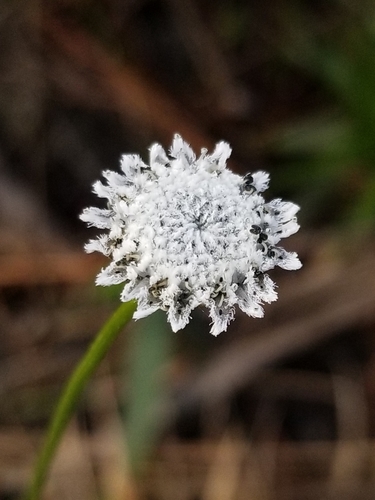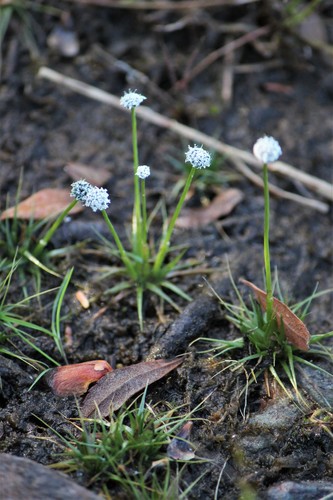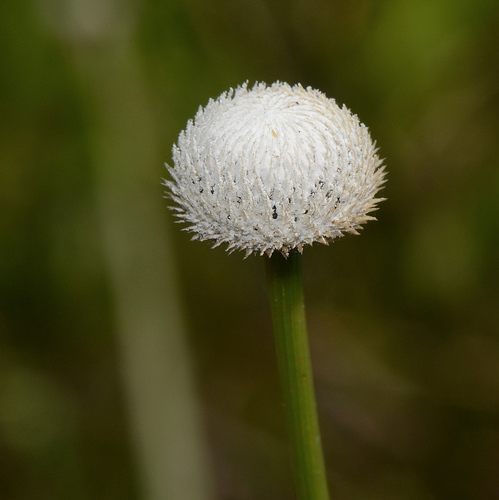
About Eriocaulon decangulare L.
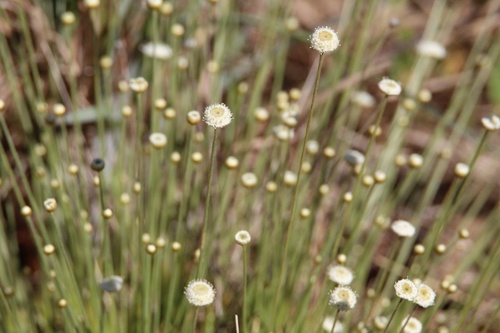
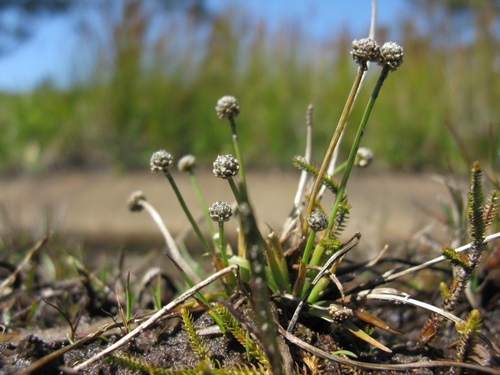
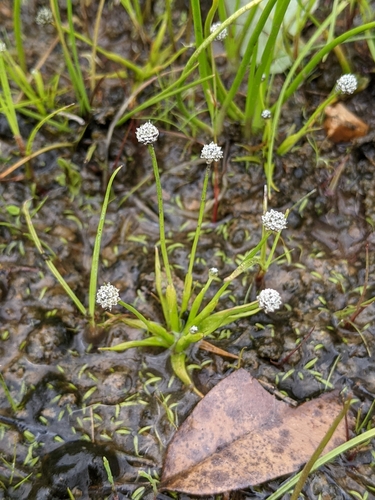
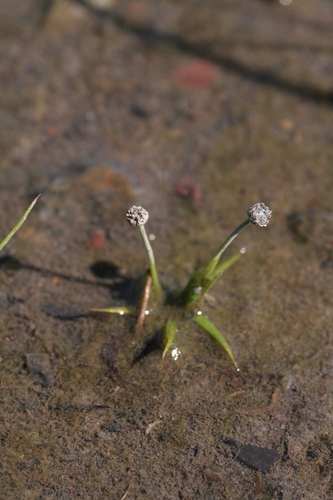
Eriocaulon decangulare, commonly called ten-angled pipewort, hat pin and bog button, is a monocotyledonous plant native to the eastern United States, Mexico and Nicaragua. Its distribution is quite irregular, featuring several disjunct populations and a discontinuous primary range. Most of its habitat in the United States lies on the Atlantic Coastal Plain. It grows at relatively low elevations, and does not occur above 300 metres above sea level. This species grows in moist to wet peat and sand, and is associated with savannahs, bogs, pinelands, ditches, and the banks of cypress domes. There are two recognized varieties of ten-angled pipewort: E. decangulare var. decangulare, and E. decangulare var. latifolium. Eriocaulon decangulare var. decangulare occurs in the United States, Mexico and Central America. In the United States, it ranges from New Jersey south to south Florida, and west to southwest Arkansas and east Texas. It grows in bogs, seepage bogs, swamps, mafic fens and seeps, wind-tidal marshes, sea-level fens, and wet pine savannas and flatwoods. Eriocaulon decangulare var. latifolium is restricted to the Florida Panhandle, southern Alabama and Mississippi, with an additional disjunct population in northeast Florida. It grows specifically in seepage bogs. A study of three inland mountainous populations of this species in North Carolina found that ten-angled pipewort has a strong affinity for acidic soil, with samples ranging from pH 4.1 to 5.2. At all studied sites, 58 to 71% of the plant species growing alongside it were either obligate or facultative wetland plants. Sphagnum mosses were another distinct common feature of its habitat, covering 30 to 60% of the study sites. The study results suggest that Eriocaulon decangulare benefits from disturbance, due to its preference for high sunlight. The smallest examined population received only 50% full sunlight, while the other two populations received full sunlight more than 90% of the day and supported much larger population sizes. For this reason, control of woody plant growth through natural or artificial means is important for maintaining healthy populations of the plant. Ten-angled pipewort has been found growing alongside several rare or threatened wetland plants, including Cleistes divaricata (spreading pogonia), Drosera rotundifolia (round-leaved sundew), Carex trichocarpa (hairy-fruit sedge) and Sanguisorba canadensis (Canada burnet), though these associations vary between sites.