About Erigeron philadelphicus L.
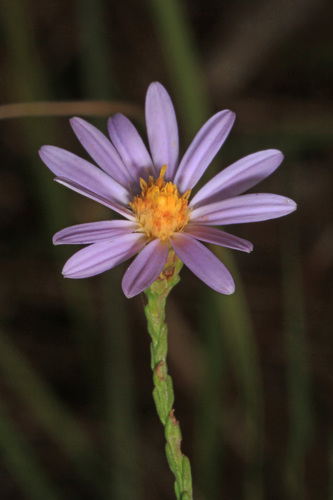
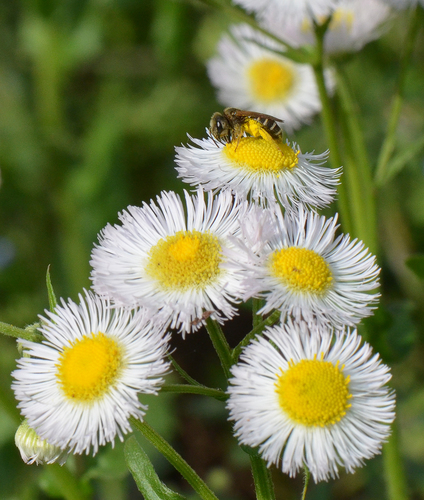
Erigeron philadelphicus L., commonly called Philadelphia fleabane, is a herbaceous plant that grows 15 to 76 centimeters (1⁄2 to 2+1⁄2 feet) tall. It has hairy stems covered in rough hairs, with alternate, simple leaves that can reach up to 15 centimeters (6 inches) long. Middle to lower leaves on the stem are heart-shaped. Philadelphia fleabane produces flower heads in spring, growing in groups of up to 35 heads. Each head has between 100 and 150 pink or white ray florets, which surround numerous yellow disc florets. Open flower heads are less than 2.5 centimeters (1 inch) in diameter. The plant is actively growing from spring through summer, between April and July, and it continues flowering until September. Philadelphia fleabane is native to North America, and occurs across almost all of the United States and Canada. It has also been introduced to Europe and Asia, where it is classified as an invasive weed in some regions. It typically grows along roadsides, in fields, thickets, and open woods. It grows best with access to moisture, partial shade, and in areas affected by natural or human disturbance. Two variants have specialized restricted habitats: Provancher's fleabane grows only on calcareous rocky shorelines in the Great Lakes-St. Lawrence lowlands, while Vancouver Island fleabane grows only in salt marshes and on beaches of Vancouver Island in British Columbia. In its ecology, common Philadelphia fleabane acts as a larval host plant for the obscure schinia moth, and its flowers are pollinated by butterflies, bees, and moths.