About Erigeron decumbens Nutt.
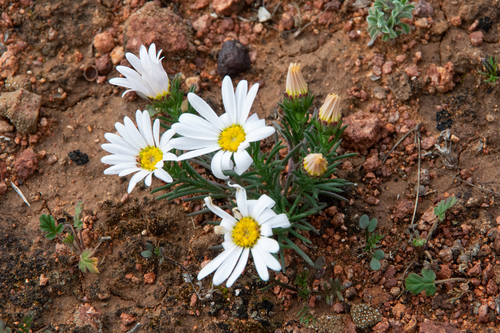
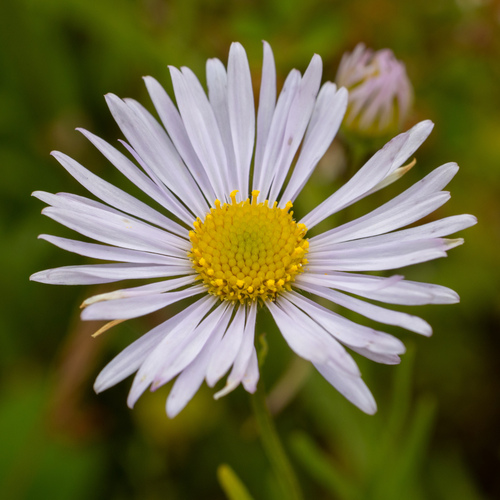
Erigeron decumbens Nutt. is a species of flowering plant in the daisy family Asteraceae, commonly known as Willamette fleabane or Willamette daisy. It is native to Oregon and California in the United States. Different taxonomic authorities treat this species differently. One common treatment recognizes it as a single species divided into two varieties: the Californian variety Erigeron decumbens var. robustior, and the rare endangered Oregon variety Erigeron decumbens var. decumbens. An alternative treatment separates the Californian taxon into its own distinct species, Erigeron robustior, leaving only the rare Oregon taxon classified as Erigeron decumbens. Whether classified as Erigeron decumbens var. decumbens or Erigeron decumbens, the Oregon variety is a federally listed endangered species of the United States. This Oregon taxon has 28 known occurrences, all growing in increasingly rare prairie habitat in the Willamette Valley. Erigeron decumbens is a perennial herb that reaches up to roughly half a meter in length, and grows in an upright or decumbent (trailing along the ground) form. The Oregon plant grows colonially, producing multiple stems from a branching caudex, and is severely threatened. Its inflorescence can hold many flower heads, which have white or blue-tinged ray florets that may turn pink when dried. The Californian plant (whether treated as a separate species or a variety) does not grow colonially, its caudex branches little or not at all, its inflorescence holds no more than 3 flower heads, and its florets are white or pink-tinged.