About Ericameria paniculata (A.Gray) Rydb.
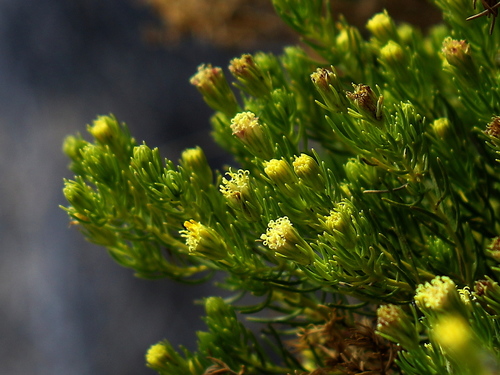
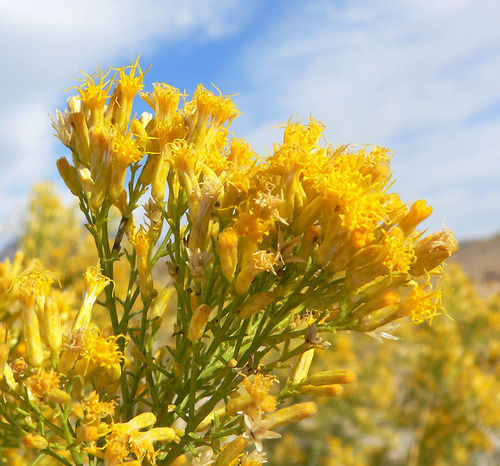
Ericameria paniculata is a branching shrub that can grow up to 2 meters (80 inches) tall. Its spreading or erect stems are glandular and resinous, and are often marked with black bands or splotches caused by the smut fungus Puccinia splendens. Its glandular leaves are filiform, meaning they are thread-shaped or narrowly oblanceolate, and reach up to 3.5 centimeters (1.4 inches) in length. The plant's inflorescence is a group of small yellow flower heads; each flower head holds 5 to 8 disc florets, and has no ray florets. The fruit of this shrub reaches up to 1 centimeter (0.4 inches) long when its long pappus is included, and the fruits are wind-dispersed. This species flowers between June and December.
Ericameria paniculata is native to the deserts of Arizona, Nevada, southern California, and southwestern Utah, and it is especially common in the Mojave Desert. It grows in a very wide range of habitats, including disturbed areas such as roadsides, and it can tolerate poor soils. Plant species that commonly grow alongside it include Larrea tridentata (creosote), Yucca brevifolia (Joshua tree), Baccharis, Hymenoclea salsola (white burrobush), Atriplex polycarpa (desert saltbush), and Acacia greggii (catclaw acacia).