About Erica tetralix L.
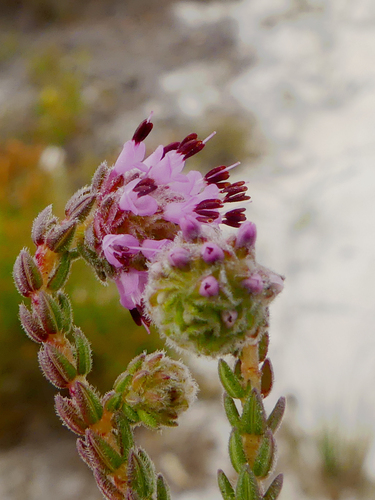
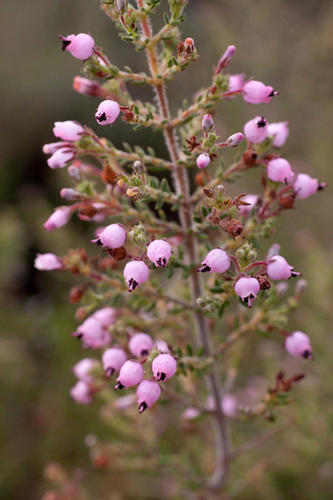
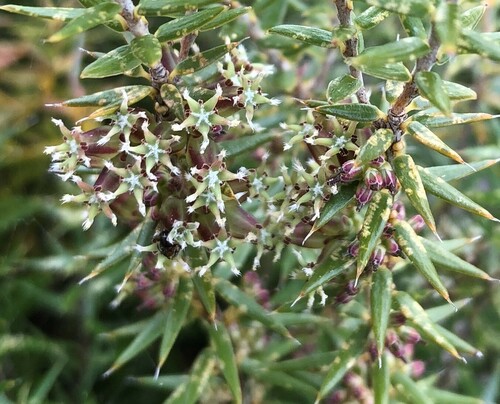
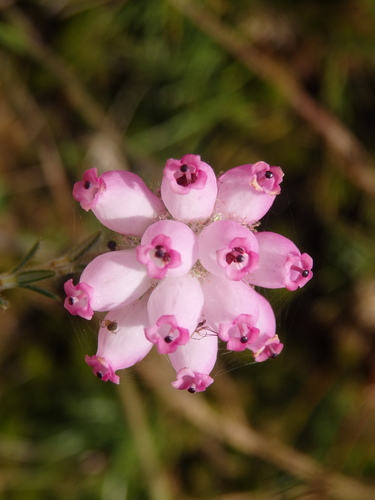
Erica tetralix L. is a perennial subshrub with glandular leaves arranged in whorls of four, which is the origin of its scientific epithet tetralix. In summer and autumn, it produces small pink bell-shaped flowers that droop in compact clusters at the tips of its shoots. This species is native to western Europe, ranging from southern Portugal to central Norway. It also grows naturally in boggy inland areas of Central Europe, including Austria and Switzerland, and has been introduced to parts of North America. It can become a dominant component of plant communities in bogs, wet heaths, and damp coniferous woodland. A species of Trialeurodes whitefly discovered in 1971 was named T. ericae after this plant, because the two are frequently associated. In cultivation, Erica tetralix is a calcifuge, meaning it, like other heathers, requires acidic soil. Numerous cultivars have been developed for garden use. Two of these cultivars, the white-flowered E. tetralix f. alba 'Alba Mollis' and the form E. tetralix f. stellata 'Pink Star', have earned the Royal Horticultural Society's Award of Garden Merit.