About Eragrostis spectabilis (Pursh) Steud.
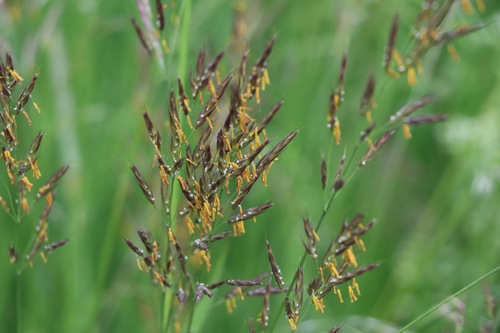
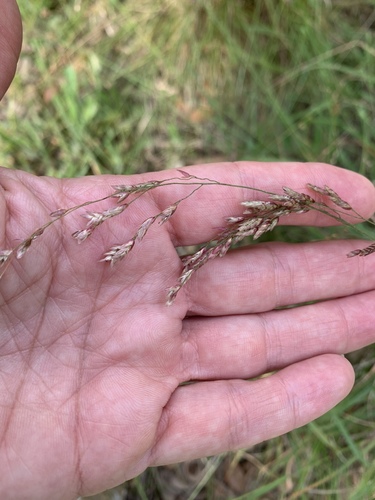
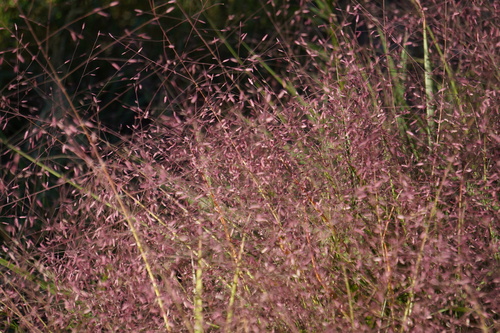
Eragrostis spectabilis (Pursh) Steud., commonly called purple love grass, is an upright, tufted grass that grows 30 to 70 cm tall. Its densely hairy leaves can reach 20 to 45 centimeters (approximately 7.9 to 17.7 inches) in length. The plant gets its common name from the inflorescence that grows toward the top of the stem. The inflorescences bloom from late summer to early fall, turn purple, and contain the plant's seeds. As the plant matures, the inflorescence often breaks off, and its movement helps disperse the seeds. The seeds are reddish-brown, and typically measure 0.6-0.8 mm long. After seed dispersal in fall, the plant's stems and branches turn a soft brown or tan color. Eragrostis spectabilis's inflorescence has a whorled branching structure, with three branches growing off the rachis at one time. This species is native to eastern and central North America, ranging from Maine west to South Dakota, south to Florida and Arizona, and extending further south into Mexico. Outside its native North American range, purple love grass is widely grown non-natively as an ornamental plant in China. It is commonly found in woodlands, along roadsides, and in sandy fields. In the southeastern United States, it has been observed in habitats including pine woodlands, scrub barrens, and disturbed areas such as parking lots and roadsides. It is most abundant in full sun environments with moist, sandy soils. Eragrostis spectabilis is a perennial C4 grass that goes dormant over winter. It prefers sandy soil and disturbed areas such as sandy or gravelly roadsides, plains, and woodlands. It is highly resistant to drought, salt, and cold, which makes it an excellent choice for planting along roadsides, especially in colder areas with seasonal snowfall. Once established, it requires little to no additional maintenance. It prefers full sun, but will tolerate partial shade, and grows best in damp to wet soil. It spreads both through rhizomes and through seed dispersal: seeds are spread by birds and by wind movement of the panicle. Seeds have physiological dormancy, and are ready to germinate after a dormancy period of approximately ten weeks. Eragrostis spectabilis is often used for reintroducing native species to disturbed areas, particularly plains and hot, sandy areas, because it spreads readily via seeds and has a 60% seed dormancy rate that only increases after the required dormancy period. The only drawback is that it is not widely available for commercial purchase, so it can be expensive. It is also used for erosion control, because its fibrous roots hold soil in place. It can serve as a lawn alternative in areas with low foot traffic, since it only needs to be mowed a few times per growing season. Dried inflorescences of this plant are commonly used in dried flower arrangements. Eragrostis spectabilis attracts multiple species of birds, butterflies, and other pollinators. Its nutrient-rich seeds act as a food source for small mammals such as mice, and for songbirds. It is also used as grazing forage for both livestock and wild animals such as deer; in winter, deer will dig up the basal part of the stem to eat as well. The plant itself also serves as nesting material and cover for smaller animals.