About Eragrostis pilosa (L.) P.Beauv.
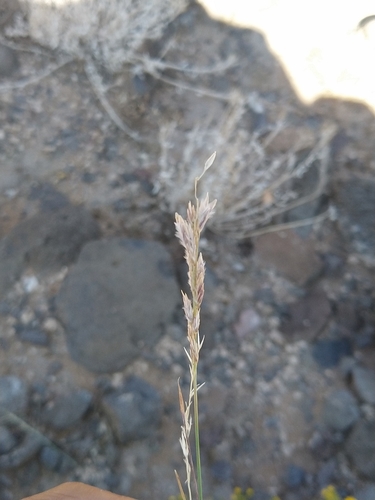
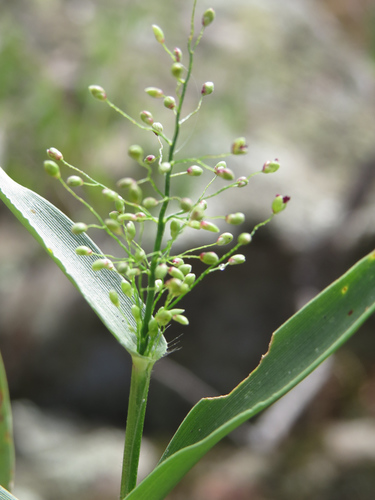
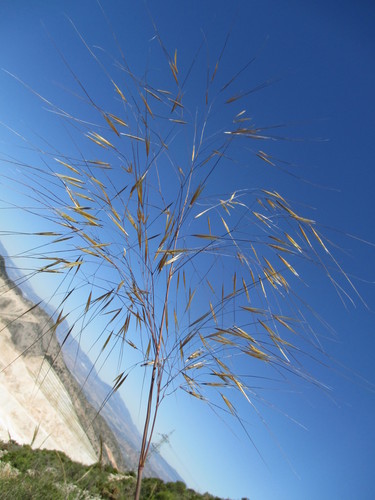
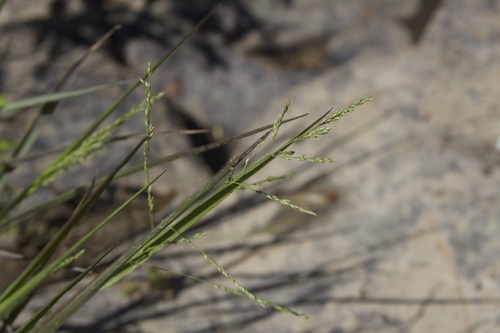
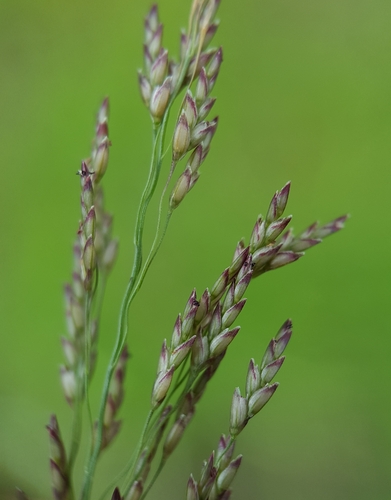
Eragrostis pilosa (L.) P.Beauv. is an annual grass that grows up to 70 centimeters tall. Its narrow leaves can reach up to 20 centimeters in length. Both the stems and foliage usually have scattered glandular pits; when the species is divided into varieties, how abundant these pits are helps to distinguish between the different varieties. The ligule is a short fringe of hairs. The inflorescence is an open panicle, with each branch reaching up to 10 centimeters long. The lowest branches grow in a whorl around the stem. The narrow spikelets, which range in color from grayish to purple-green, are up to one centimeter long, and each can hold between 10 and 17 florets. This grass grows in a wide variety of habitat types, and easily becomes established in disturbed areas including roadsides and crop fields. It grows well in moist and wet habitats such as swamps. It reproduces and spreads by seed; seeds are transported by water, wind, in soil and hay, and on machinery and trains. It likely forms a long-lasting soil seed bank. This grass can become infested with the parasitic plant purple witchweed, Striga hermonthica. The grass has some value as forage and fodder. Its grain is edible for humans.