About Eragrostis lehmanniana Nees
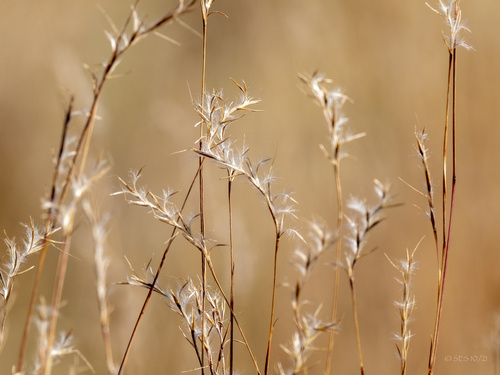
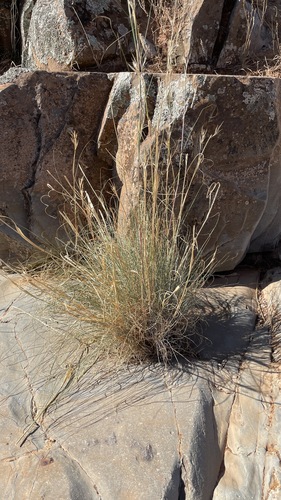
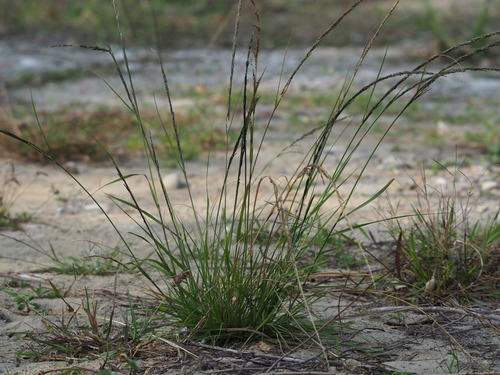
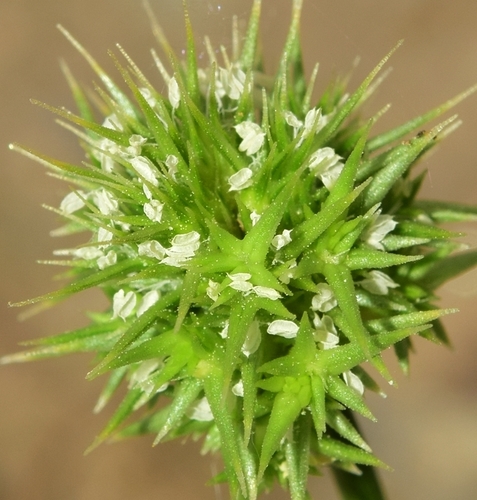
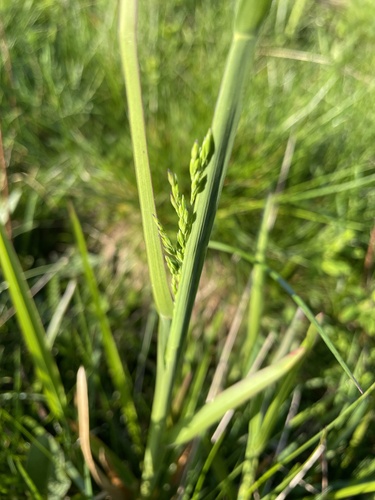
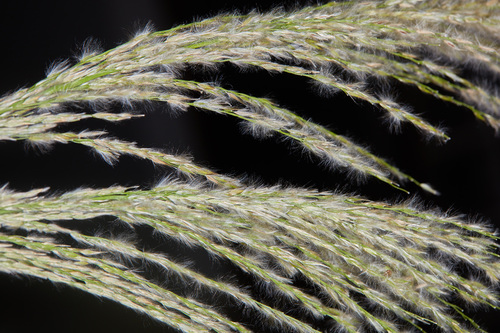
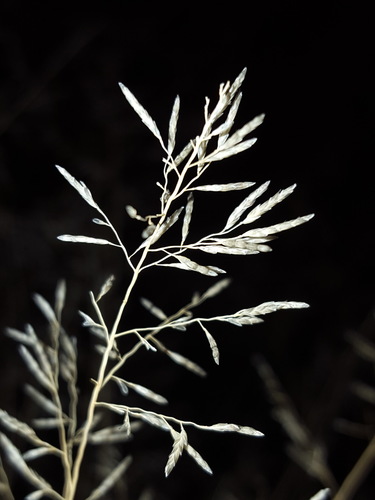
Eragrostis lehmanniana Nees is a grass species commonly called Lehmann lovegrass. It is native to southern Africa, and has been introduced to other regions, where it is well known as an invasive weed in some areas including Arizona in the United States. This grass forms loose, open clumps of stems between 61 and 80 centimetres (2.00 to 2.62 ft) long. Some stems grow erect, while others lie along the ground and root when their nodes touch the growing substrate. Its leaves grow up to 15 centimetres (5.9 in) long. The inflorescence is a panicle reaching up to 18 centimetres (7.1 in) long and 8 centimetres (3.1 in) wide, with branches that lie pressed against the stem or extend out at an angle. The spikelets grow up to 1.4 cm (0.55 in) long, and each holds up to 14 individual flowers. This grass can spread through stolons. Within its native range in southern Africa, this grass is common across multiple habitat types, including Acacia woodland, Kalahari grasslands, and savanna. It has been introduced to both North America and South America. The grass was first introduced to Arizona in the United States in 1930, to replace native grasses that had been severely overgrazed by livestock. By the 1940s the grass was spreading, and grew in areas where it had not originally been planted. By 1980, the grass had been sown across over 100,000 acres, but it failed to establish in many regions, including parts of Texas and New Mexico. It thrived in the desert grasslands and shrublands of southeastern Arizona, however, and grows best in areas with sandy soils, rare freezes, and summer rainfall between 15 to 22 cm (5.9 to 8.7 in). It does not spread and cannot survive outside of these parameters. By 1988, it was a major species on 347,000 acres of Arizona desert. In parts of this region, the native ecosystem has been replaced by velvet mesquite woodland with an understory dominated by Lehmann lovegrass. This species sometimes hybridizes with Eragrostis curvula, commonly called weeping lovegrass. Lehmann lovegrass forms large monotypic stands that crowd out native grasses and reduce both plant and animal diversity. It builds up a soil seed bank that can survive long dry periods, which gives it an advantage over many native grass species. It is documented to have a negative impact on other native plants, including Agave palmeri, a key component of local Arizona ecosystems.