About Eragrostis curvula (Schrad.) Nees
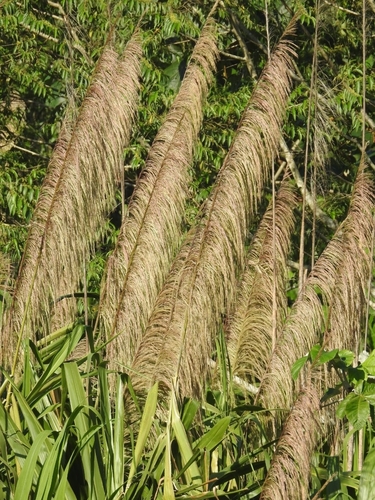
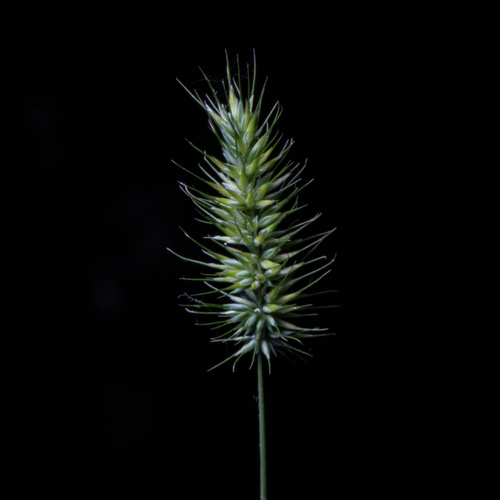
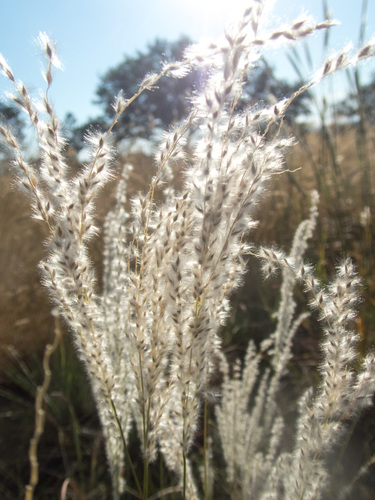
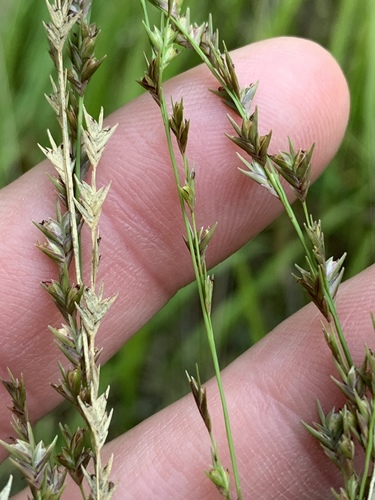
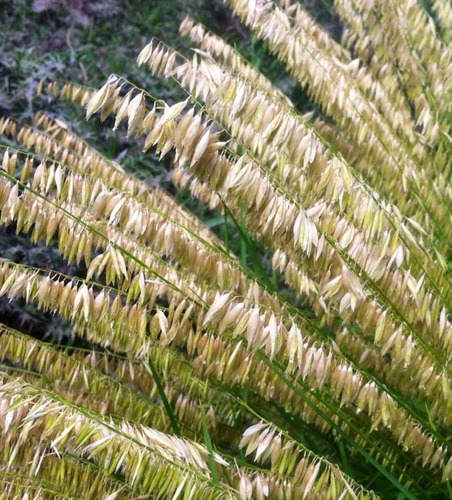
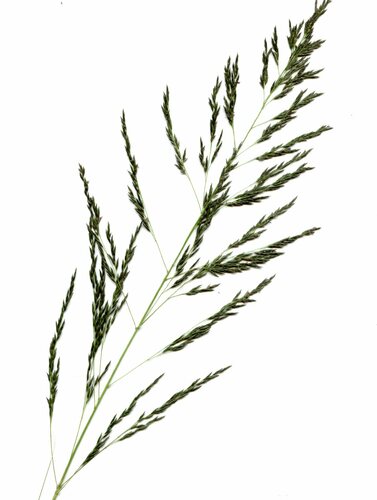
Eragrostis curvula (Schrad.) Nees is most commonly a long-lived perennial grass, though it can occasionally grow as an annual. Its appearance is variable, with many distinct natural and cultivated forms existing. Generally, it grows in stem tufts that reach up to 1.9 metres (6.2 ft) tall, and these tufts can grow to 38 centimetres (1.25 ft) in diameter. This grass develops from an extensive thick root network. Observed roots have been recorded penetrating over 4 metres (13 ft) deep into soil and spreading 3 metres (9.8 ft) laterally. Roots can grow as much as 5 centimetres (2.0 in) per day. The first root that emerges from a seedling can produce up to 60 small rootlets per inch, and this dense root system forms a sod. The grass has drooping leaves that grow up to 65 centimetres (2.13 ft) long, are just a few millimeters wide, and may have rolled edges. Its inflorescence is a panicle, with branches lined with spikelets around one centimeter long. Each spikelet can hold up to 15 flowers, and a single panicle can produce 1000 seeds. Cultivated plants can produce two seed crops per year. This plant reproduces via self-fertilization or apomixis, a form of reproduction that does not require fertilization. In its native range of Africa, this grass is a valuable forage source for livestock. Many ecotypes exist, and several of these ecotypes have been collected and introduced to the United States as cultivated cultivars. This grass was first planted in the United States in Stillwater, Oklahoma, in 1935. It was found to be good for livestock feed, and its extensive root network made it effective for erosion control. It spread quickly after being planted for ornamental use, reached New York in the 1960s, and was planted alongside many highways including the Long Island Expressway in the 1970s and 1980s. Today it grows as an invasive species in wild habitats across the contiguous United States, from the Southwest to the East Coast. It can be found in woodlands, chaparral, prairie, grassland, and disturbed areas. It tolerates both strongly acidic and strongly alkaline soils, and grows easily on mine spoils. This species can hybridize with other Eragrostis species, including Eragrostis caesia, E. lehmanniana, and E. planiculmis. Named cultivars of this grass include 'South African Robusta Blue', 'Witbank', 'Ermelo', 'Kromdraai', 'American Leafy', and 'Renner'. Cultivars are typically selected for improved seed yield, better palatability for livestock, and increased drought resistance. It is planted along waterways in Sri Lanka, on mountainsides in Japan, and used for oversowing fields in Argentina. In the United States, it is often planted alongside Korean lespedeza, and used as a nurse crop for sericea lespedeza, coastal panic grass, and switchgrass. It is classed as an invasive species in some regions, including parts of the United States and Victoria and other states in Australia, where it grows aggressively and can outcompete and displace native plants. Its natural drought tolerance allows it to survive well in dry environments. In Lesotho, this grass is used to make baskets, brooms, hats, ropes, and candles; it also serves as a food source, is used as a charm, and is included in funeral rituals.