About Epirrita dilutata (Denis & Schiffermüller), 1775
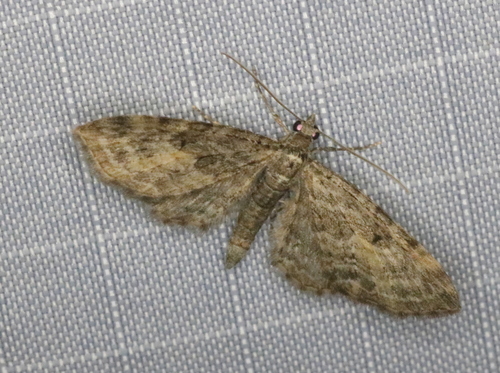
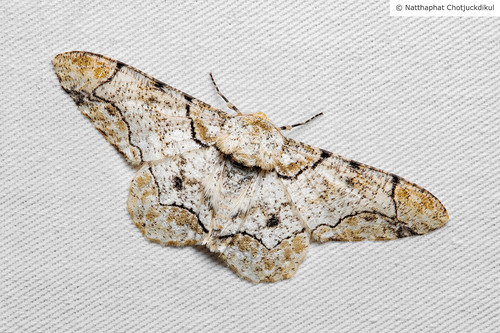
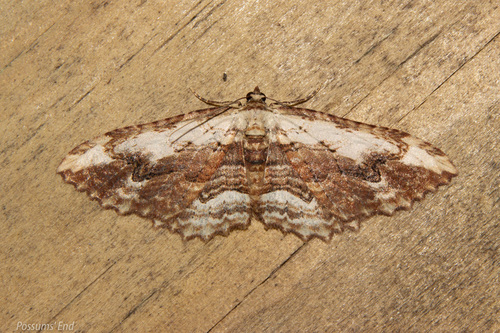
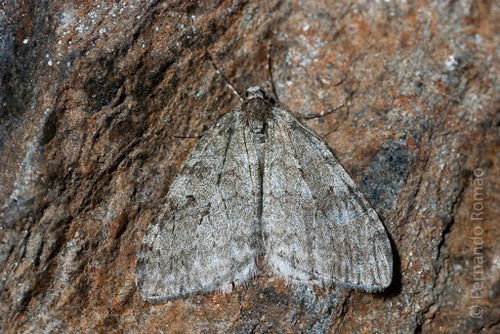
The November moth, with the scientific name Epirrita dilutata, is a moth species belonging to the family Geometridae. It was first described by Michael Denis and Ignaz Schiffermüller in 1775. This species is distributed in the Palearctic realm, across western Europe ranging from central Scandinavia south to the Mediterranean, and extending east to the Caucasus and western Russia. Its wingspan measures 38–44 mm. Forewings have variable patterning of alternating pale and dark bands, with a pale base colour overlaid with darker grey and brownish tints, marked with wavy lines. Hindwings are whitish-grey with two distinct lines. The distal fascia points inward toward the discal spot. Melanism is common in this species, and in some locations, entirely dark individuals make up the majority of the local population. The November moth is extremely similar in appearance to three close relatives: the pale November moth, the autumnal moth, and the small autumnal moth. These four species usually cannot be distinguished from one another without examination of their genitalia; for further details see Townsend et al. This moth flies at night from September to November. It is attracted to artificial light, and occasionally visits nectar-rich flowers. Its caterpillars are green with red markings, and feed on a wide variety of trees and shrubs. This species overwinters in the egg stage. Recorded host food plants for the caterpillars include Acer (maple), Betula (birch), Corylus (hazel), Crataegus (hawthorn), Fraxinus (ash), Malus (apple), Prunus, Quercus (oak), and Ulmus (elm).