About Epiphyllum oxypetalum (DC.) Haw.
Epiphyllum oxypetalum (DC.) Haw. has stems that are erect, ascending, scandent, or sprawling, and branch profusely. Primary stems are terete, reaching up to 6 metres (20 ft) in length, flattened laterally, and ligneous at their bases. Secondary stems are flat and elliptic-acuminate, growing up to 30 cm × 12 cm (12 in × 5 in). Stem margins range from shallowly to deeply crenate and undulate. Stems have a waxy appearance, which suggests cutin may be present; cutin works to reduce water loss from stems. When stems are cut, a gel-like substance oozes out from the cut, and stems contain a large amount of water-filled tissue.
Epiphyllum oxypetalum is native to southern Mexico and broad areas of South America. It is widely cultivated, and many plants have escaped from cultivation in tropical regions, particularly southeast Asia. It has become fully naturalized in China.
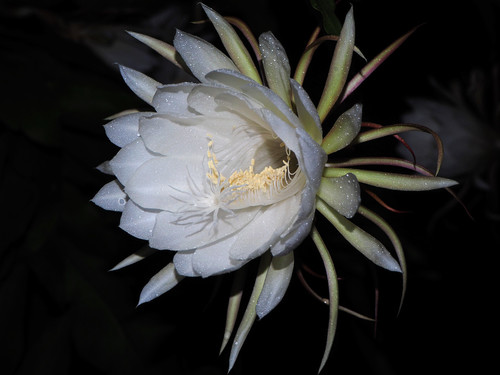
Epiphyllum oxypetalum is an easily cultivated, fast-growing Epiphyllum species, and it is widely cultivated around the world. It flowers from late spring through late summer, and large mature specimens can produce multiple batches of flowers in a single growing season. It is recognized as having medicinal properties across many Asian cultures, including those of India, Vietnam, and Malaysia. The plant is commonly used in traditional medicine to treat respiratory ailments and bleeding conditions, and it is also thought to reduce pain and inflammation. In the popular film Crazy Rich Asians, which is based on Kevin Kwan's novel of the same name, characters host parties to watch the brief blooming of this plant, which is called tan hua in Chinese (simplified Chinese: 昙花; traditional Chinese: 曇花; pinyin: tánhuā).