About Epipactis atrorubens (Hoffm.) Besser
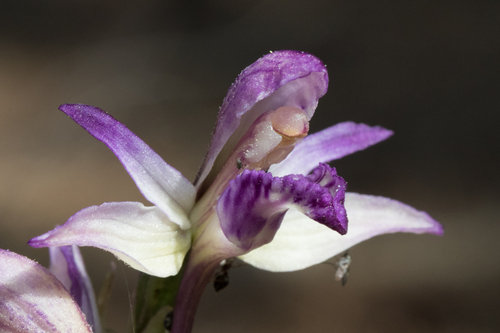
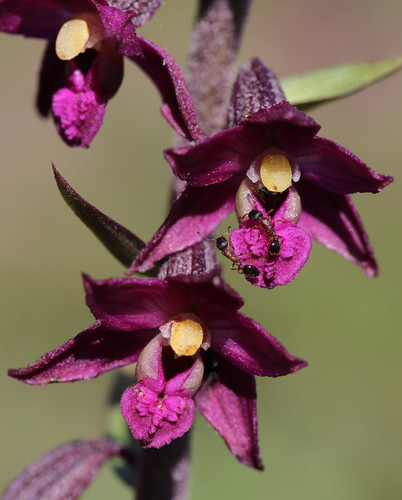
Epipactis atrorubens, commonly known as the dark-red helleborine, is a hardy orchid species. It has a short rootstalk, often accompanied by multiple fleshy roots. Mature plants reach 20 to 80 cm (7.9 to 31.5 in) in height, and bloom from June to August with erect inflorescences that are mostly purple and have dense hairs on their upper sections. The blossoms produce a strong vanilla scent, which is especially noticeable in warm weather. Flower color can sometimes vary, but is generally reddish-brown. After flowering, it produces a capsule fruit containing light, dust-like seeds that are dispersed by wind. Multiple natural hybrids between this species and other Epipactis species have been recorded. The dark-red helleborine is widespread across Europe, ranging north into the subarctic, south to the Mediterranean, and east to Western Siberia and the Caucasus. It grows at altitudes from sea level up to 2,400 m (7,900 ft), and is found in mountainous regions like the southern Alps. It has experienced population decline in Central Europe over recent decades, but is not considered one of the most severely threatened orchid species. It is also reported to be naturalized at one location in Vermont, United States. This orchid favors warm, dry locations with basic to neutral pH, nutrient-poor, permeable soil. It grows in loose rock, scree, or sandy soils over a limestone base, and occurs in habitats including dunes, lawns, and open forest. It acts as a pioneer species, colonizing fallow areas, road embankments, and waste dumps during the early to middle stages of ecological succession, growing among grass and shrub communities and in open birch stands. Ecologically, Epipactis atrorubens depends on mycorrhizal associations with several species of fungi in the order Pezizales. Pezizales are among the least abundant fungal groups in the forests where this orchid grows. The species' flowers are typically pollinated by insects, most commonly bees.