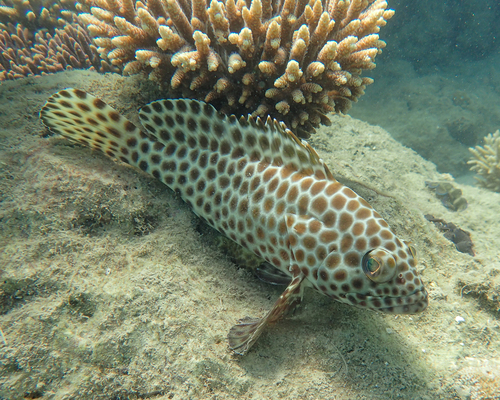
About Epinephelus striatus (Bloch, 1792)
Scientific Name and Size
The Nassau grouper (scientific name Epinephelus striatus (Bloch, 1792)) is a medium to large fish that grows to over 1 m (3.3 ft) in length and can reach up to 25 kg (55 lb) in weight. It has a thick body and a large mouth, which it uses to "inhale" prey.
Base Coloration
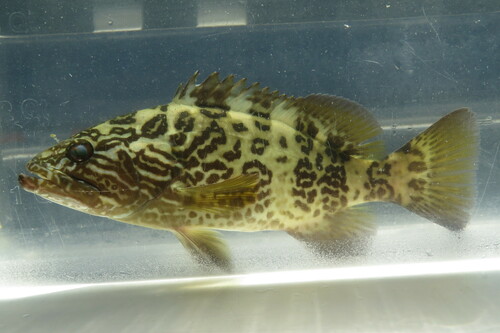
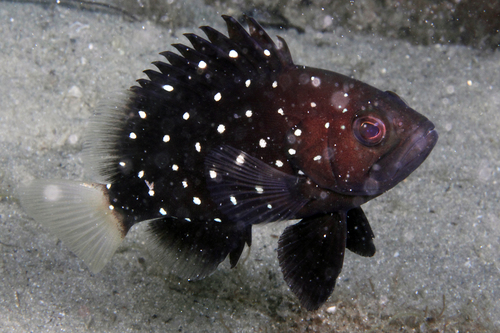
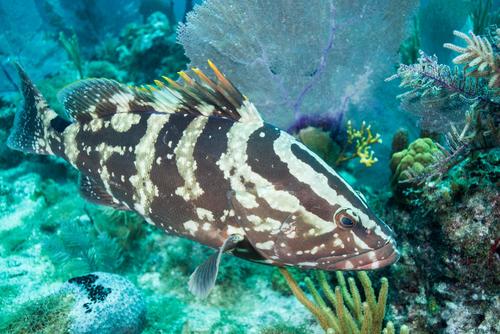
Its base coloration varies based on the individual fish's circumstances and surrounding environment. Individuals found in shallow water down to 18 m (60 ft) are tawny in color, while specimens that live in deeper waters are pinkish, red, or sometimes orange-red.
Body Markings
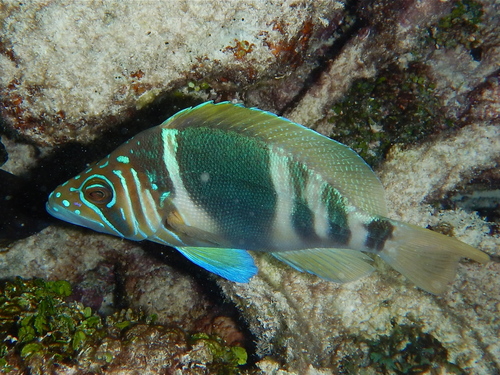
Superimposed on this base color are a number of lighter stripes, darker spots, bars, and patterns, including black spots located below and behind the eyes, and a forked stripe on the top of the head.
Habitat Association
Nassau grouper live near reefs, and are one of the largest fish species found around coral reefs.
Depth Range
They can be found from the shoreline down to depths near 100 m (330 ft).
Geographic Distribution
They occupy the western Atlantic Ocean and the area around the Caribbean Sea, ranging from Bermuda, Florida, and the Bahamas in the north to the eastern coast of Venezuela in the south. They are only found in a small number of locations in the Gulf of Mexico, most notably along the coast of Belize.