About Epilobium hirsutum L.
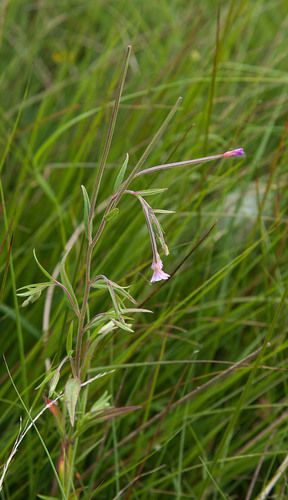
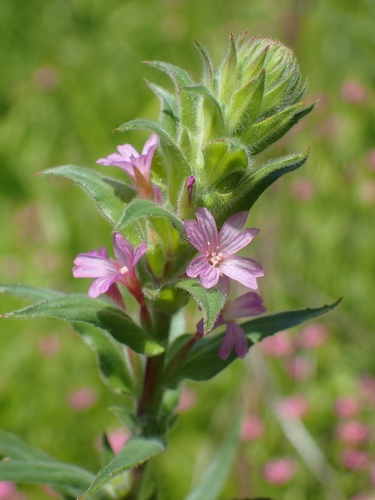
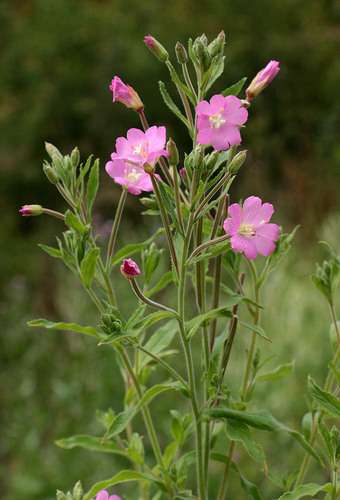
Epilobium hirsutum L. is a tall perennial plant that can grow up to 2 metres in height. Its robust stems are covered in a dense layer of soft, spreading hairs. The hairy leaves measure 2–12 cm long and 0.5–3.5 cm wide; they are long and thin, widest below their middle, have sharply toothed edges, and grow without a stalk.
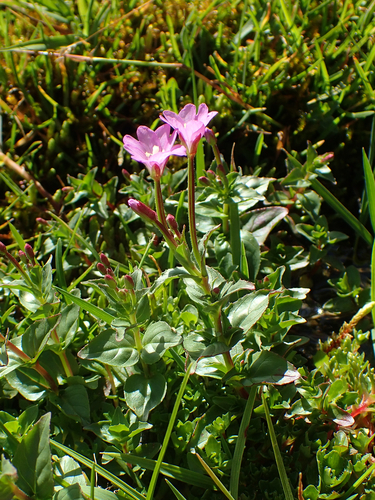
The plant produces large flowers with four notched purple-pink petals, which are usually 10–16 mm long. Each flower has 8 stamens, a white four-lobed stigma, and green sepals. Across most of its European range, it is relatively easy to distinguish from other Epilobium species present there by its flowers.
This species is native to North Africa, most of Europe as far north as southern Sweden, and parts of Asia. It is absent from most of Scandinavia and north-west Scotland, and has been introduced to North America and Australia. It typically grows in wet or damp habitats without dense tree cover, at elevations up to 2,500 metres above sea level. Common natural habitats include marshland, and the banks of rivers and streams. It also grows in human-altered environments such as wet ditches, and generally in areas with high nitrate content.
It flowers from June to September, with peak flowering occurring in July and August. It occupies damp waste ground, river banks, and ditches. Its flowers are visited by many types of insects, giving it a generalized pollination syndrome. A variety of insects feed on its leaves, including the elephant hawkmoth Deilephila elpenor.