About Epilachna varivestis Mulsant, 1850
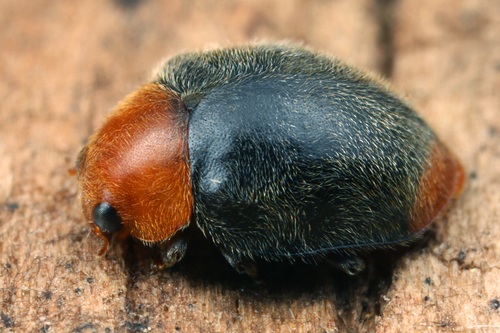
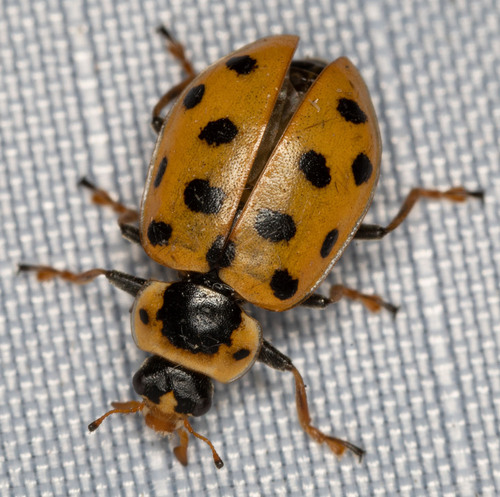
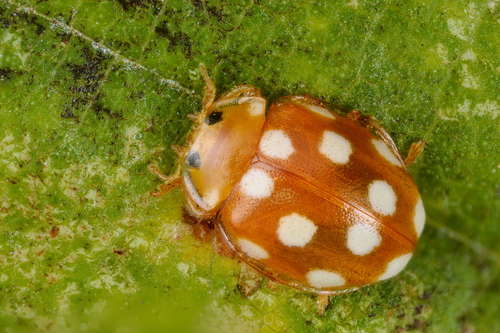
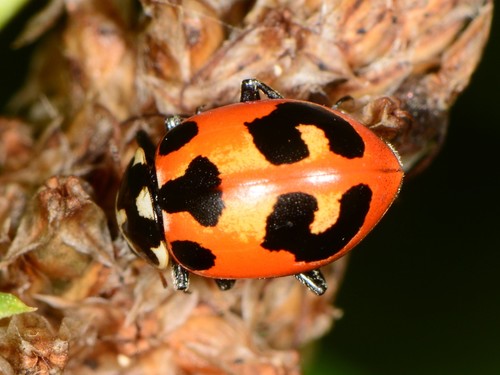
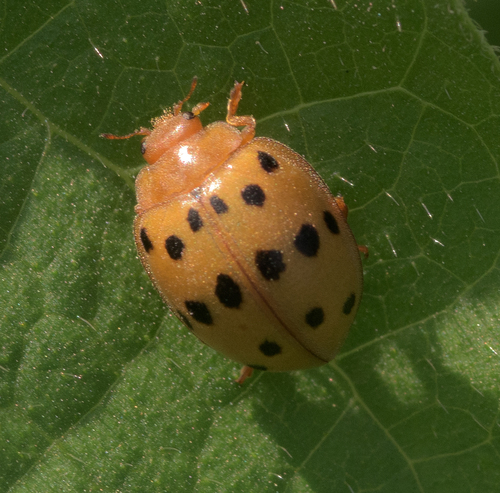
Identification: Adult Epilachna varivestis Mulsant, 1850 (Mexican bean beetle) look similar to other lady beetles. They are oval-shaped, roughly 6 to 7 millimeters long, and have eight black spots on each elytron. Their adult color varies widely, ranging from bright red to rusty brown to golden yellow. The eggs are yellow, around 1.3 millimeters long, and are glued in clusters of up to 75 to the undersides of leaves. Larvae are typically yellow, spiny, and pill-shaped. When they first emerge, they are approximately 1.6 millimeters long, and grow to about one centimeter before pupation. Distribution: The Mexican bean beetle occurs in the United States, most of its eastern U.S. states, and Mexico. It can be found as far south as Guatemala, and as far north as southern Canada or New England. It is most likely native to the southern plateau region of Mexico. Its presence depends on factors such as precipitation. It does not cause significant crop damage in Guatemala and Mexico, but can be abundant in isolated areas of the western United States. Life cycle: Adults emerge from dormancy in late spring. Each female lays several hundred eggs in clusters of 50 to 75 on the leaves of bean plants. Larvae are voracious feeders, and can cause heavy damage to a field of bean plants during an infestation. After feeding for a few weeks, larvae pupate in groups under leaves. The species overwinters in the adult life stage, and adults often travel long distances to find new fields.