About Epichorista siriana (Meyrick, 1881)
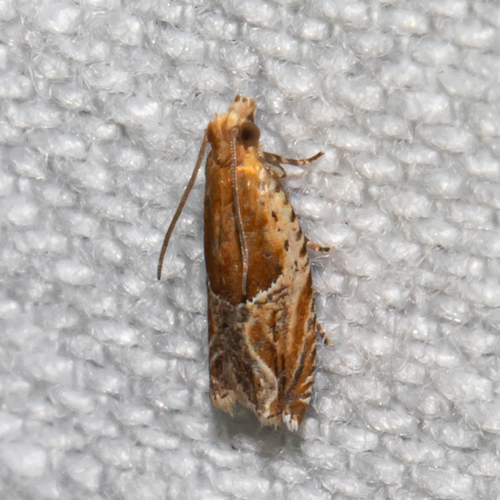
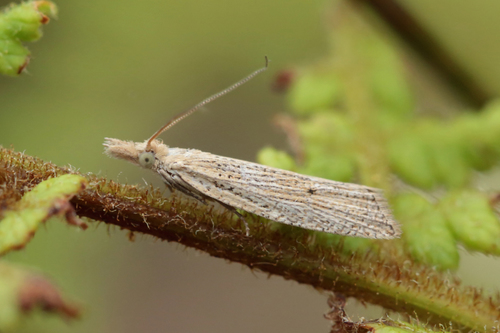
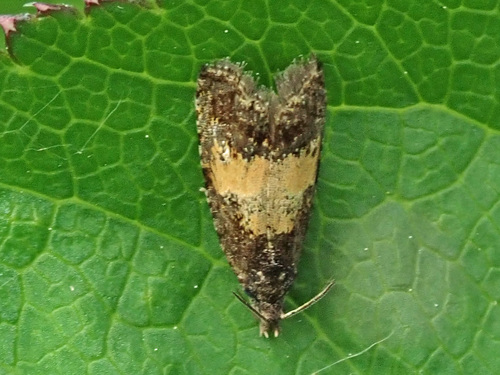
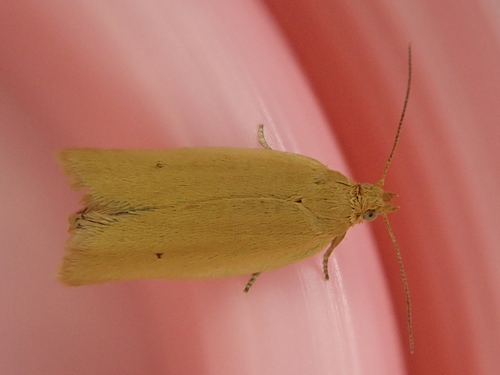
The scientific name of this species is Epichorista siriana (Meyrick, 1881). Edward Meyrick originally provided the following description of the species. Male specimens measure 4+3⁄4 to 5+1⁄2 inches. Their head, palpi, and thorax are deep brownish-ochreous. Their antennae are ochreous, ringed with dark fuscous. The abdomen is blackish-fuscous. Legs are pale greyish-ochreous, with anterior and middle tibiae and all tarsi having diffuse, blended bands of dark fuscous. Forewings are narrow, with a gently arched costa and a very obliquely rounded hindmargin. They are deep brownish-ochreous, generally mixed with dark fuscous toward the posterior end, and sometimes mixed with dark fuscous throughout. A distinct blackish dot is usually present on the disc beyond the middle. Cilia are brownish-ochreous, mixed with dark fuscous at the anal angle. Hindwings are blackish, and their cilia are also blackish, with ochreous tips around the apex. The originally described female specimen measured 6+1⁄2 inches. It matches the male in features of the head and other structures, but has a whitish-ochreous abdomen. Its forewings are somewhat more elongate, with a more acute apex and very oblique hindmargin, and are unicolorous reddish-ochreous. Its cilia are ochreous, reddish-tinged toward the apex, with whitish tips toward the anal angle. The hindwings are whitish, with faint greyish tint at the apex, and have whitish cilia. In his original description, Meyrick noted this species is distinctive, characterized by its small size and uniform deep brownish-ochreous or reddish-ochreous forewings, with blackish hindwings in males and whitish hindwings in females. Later, when discussing the species Merophyas leucaniana, then known as Tortrix leucaniana, Meyrick corrected this original description: he stated the specimen originally described as the female of E. siriana is actually a variety of M. leucaniana, and that the true female of E. siriana resembles the male. George Hudson later described the species as having a wing expansion of 1⁄2 inch. His description notes that forewings are rather narrow with an acute apex, and a very rounded, oblique termen; they are dark ochreous, slightly speckled with blackish-grey, with a blackish discal dot. The cilia are brownish-ochreous, paler toward the tornus. Hindwings are blackish-grey, darker toward the termen. This species is endemic to New Zealand. It has been observed in the North Island, including around Hamilton, the Manawatū-Whanganui region, and Wellington, as well as in the South Island. It inhabits long grass growing either along the edges of native forest or in cultivated areas.