About Epicauta hirticornis (Haag-Rutenburg, 1880)
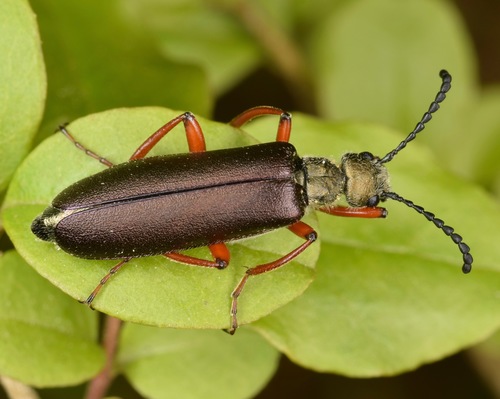
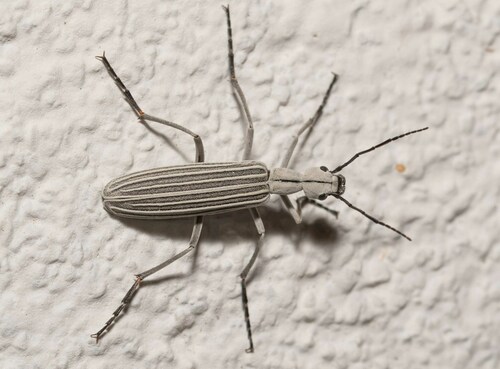
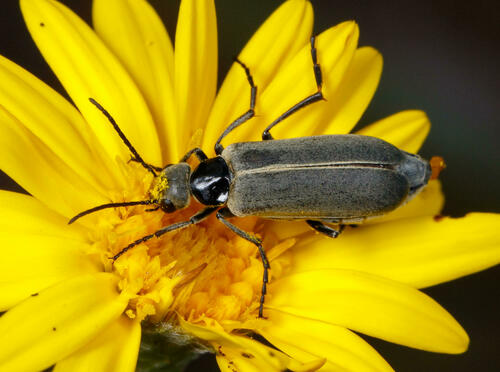
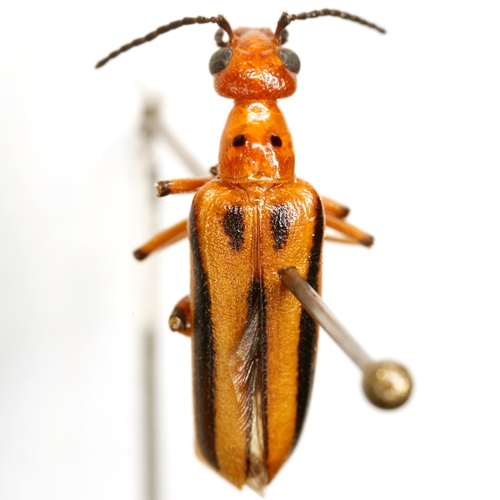
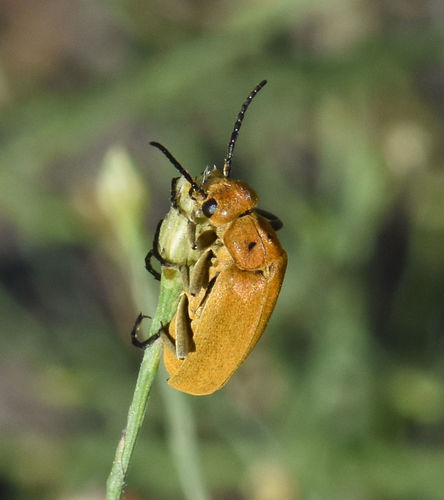
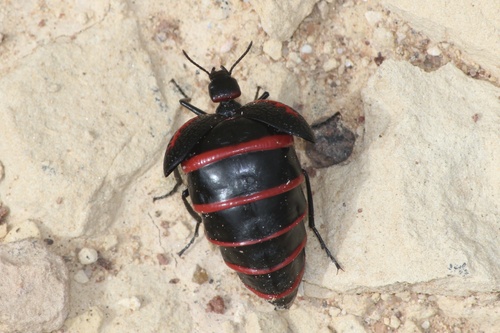
Beetles of the species Epicauta hirticornis have slender bodies with black elytra, red heads, and black-and-white striped abdomens. Their heads are distinctly separated from the prothorax, and the tip of the abdomen extends past the tip of the elytra. This species is gregarious, and individuals are typically found in groups. Before mating, pairs of Epicauta hirticornis perform unique courtship behavior. When the male mounts the female, he entwines either his left or right antenna with the female's antenna to form a double-helix shape. After entwining, the antennae vibrate, usually for 30 to 60 seconds. Females sometimes avoid mating by pressing their antennae against the surface of their host plant or hiding their antennae in other ways. Gravid females lay elongated yellow eggs in clusters of 100 to 200 inside holes that they dig in soil. After larvae hatch, they burrow through soil until they locate a grasshopper egg mass to feed on. Over the following 3 to 4 weeks, larvae molt four times and develop through a series of instars that have very distinct different physical forms.